
A loud bang from the garage can sound like something hit the house. Often, it is a broken spring. When that happens, broken garage door spring repair is not a job to put off until the weekend. The spring is what carries most of the door’s weight. Without it, a door that used to lift easily can become too heavy to move, hang unevenly, or stop halfway.
The safest first move is simple: leave the door closed if you can, keep people clear of it, and arrange a professional repair. A garage door may look like one solid panel, but its spring system is under extreme tension. Trying to force it open or repair it without the right tools can damage the door, the opener, or someone standing nearby.
How to Tell if a Garage Door Spring Is Broken
The clearest sign is a sharp bang from inside the garage, followed by a door that will not open normally. Many homeowners first notice the issue when the opener hums but the door only rises a few inches, or does not move at all.
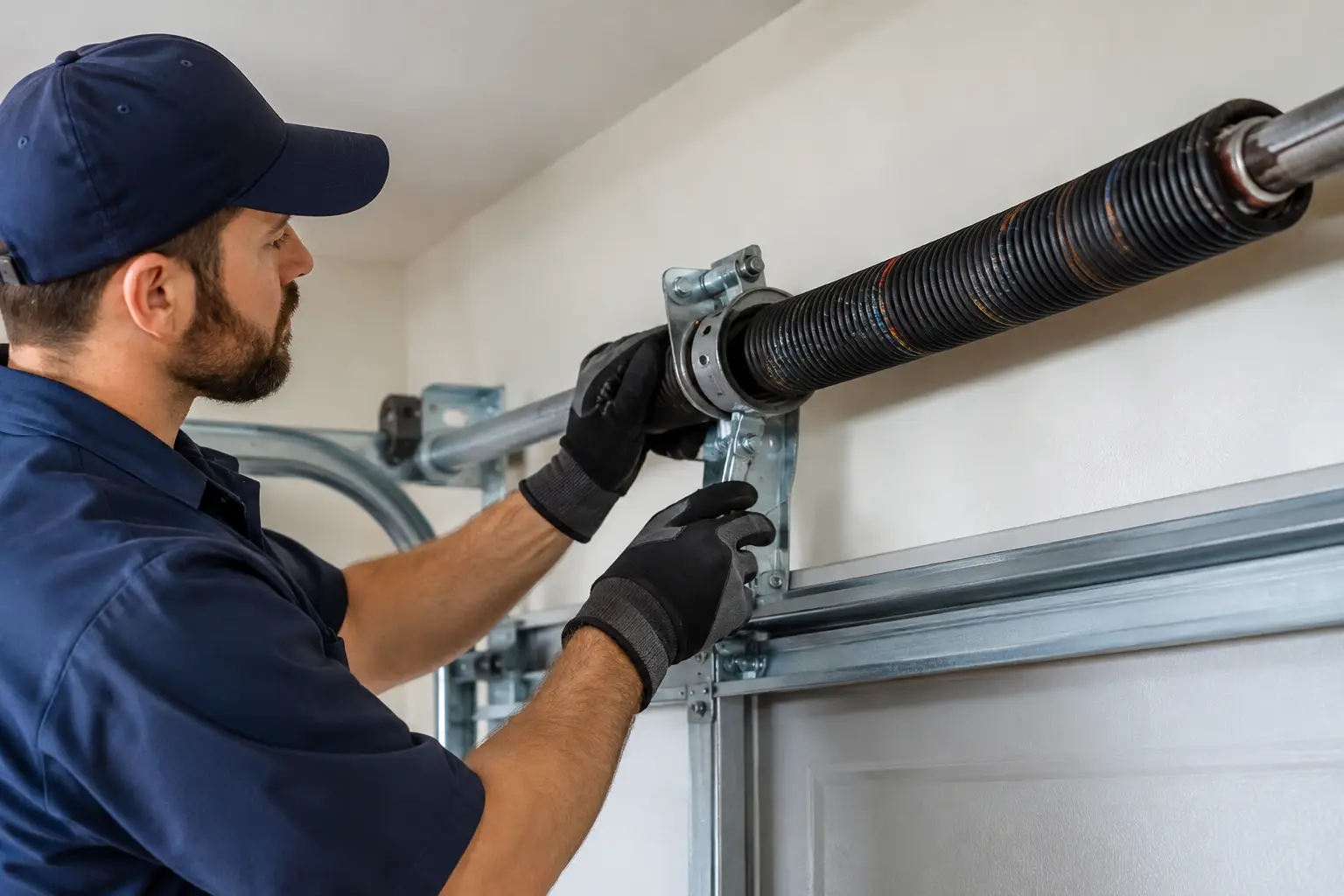
With a torsion spring system, you may see a visible gap in the coil above the door. Torsion springs sit on a metal shaft above the opening and help lift the door evenly. Extension springs run along the horizontal tracks on either side of the door. If one breaks, the door may sit crooked, lift unevenly, or have a loose cable.
Other common signs include a door that suddenly feels extremely heavy when operated manually, a garage door opener that strains or reverses, or a door that closes faster than usual. Do not assume the opener is the problem just because the remote still works. The opener moves the door, but the springs do the heavy lifting.
Why a Broken Spring Needs Prompt Repair
A standard residential garage door can weigh well over 100 pounds. Insulated doors, wood-look doors, and larger double doors weigh more. Springs counterbalance that weight so the door can travel safely on its tracks. Once a spring breaks, the whole system is out of balance.
Running the opener with a failed spring puts extra load on the motor, gears, rail, and trolley. In some cases, a homeowner starts with one broken spring and ends up needing opener repairs as well. Forcing the door manually can also pull a cable off its drum, bend a track, or cause the door to come off track.
There is also the practical issue. A stuck garage door can trap a vehicle, leave tools and belongings exposed, or prevent you from securing the house overnight. In a Southern Ontario winter, an open or poorly sealed garage can quickly bring in snow, water, and cold air.
What to Do Until Help Arrives
If the door is already closed, leave it down and avoid using the opener. Unplugging the opener prevents someone from repeatedly pressing the remote and putting strain on the system.
If the door is open and will not close, keep children, pets, and vehicles away from the opening. Do not stand beneath the door or try to pull it down by hand. A broken spring can leave the door unstable, especially if a cable has come loose or one side is carrying more weight than the other.
If you need to call for service, tell the technician what the door is doing. Useful details include whether you heard a bang, whether the door is open or closed, whether it is hanging crooked, and whether you can see a gap in the spring. This helps get you a straight quote and ensures the right parts are brought to the job.
Broken Garage Door Spring Repair Is Not a DIY Fix
There are plenty of home repairs that make sense to handle yourself. Replacing remote batteries, clearing leaves from the photo-eye sensors, and lubricating moving metal parts with a garage-door-safe lubricant are reasonable maintenance tasks. Spring replacement is different.
Torsion springs are wound under high tension. Removing, winding, or adjusting them requires the proper winding bars, locking tools, measurements, and experience. Screwdrivers, socket extensions, and improvised tools are not safe substitutes. A spring or tool can release suddenly with enough force to cause serious injury.
Extension spring systems have their own risks. They should be fitted with safety cables that run through the centre of the spring, helping contain it if it breaks. A technician should inspect the cables, pulleys, brackets, rollers, and tracks at the same time because these parts work together. Replacing only the obvious broken piece can miss the reason the system wore out early.
What a Proper Spring Repair Includes
A professional repair starts with identifying the spring type, door weight, and correct spring size. Springs are not one-size-fits-all. The wire size, inside diameter, length, winding direction, and number of coils all affect how the door balances.
For a double-door setup with two torsion springs, replacing both springs is often the sensible choice. They were installed at the same time and have usually completed similar cycles. If one has broken from normal wear, the other may not be far behind. Replacing the pair avoids a second service call soon after, although the right recommendation depends on the condition and age of the remaining spring.
After installing the correct springs, the technician should balance the door, check cable tension, inspect the drums and bearings, and test the opener. A properly balanced door should stay close to its position when disconnected from the opener and moved manually. It should not slam down, race upward, or require excessive force.
This is also a good time to check rollers, hinges, bottom brackets, and weather stripping. That does not mean every worn-looking part needs replacement. A good technician explains what is urgent, what can wait, and why. The goal is to fix the door safely without loading the bill with work you do not need.
How Long Do Garage Door Springs Last?
Most standard springs are rated for a set number of open-and-close cycles, often around 10,000 cycles. For a household that uses the garage as the main entrance, that can be only several years. Families with multiple drivers, frequent deliveries, or a garage used for storage may reach that limit sooner.
Weather also matters in Cambridge and across Southern Ontario. Cold temperatures can make metal less forgiving, while moisture and road salt tracked into the garage can contribute to corrosion around cables, hardware, and bottom sections. A spring rarely breaks because of one cold morning alone, but winter can expose a part that was already near the end of its life.
Higher-cycle springs may be worth considering for busy households. They typically cost more upfront, but they can reduce how often the system needs spring replacement. The best choice depends on the door size, usage level, and how long you expect to stay in the home.
Can You Prevent a Spring From Breaking?
You cannot prevent normal metal fatigue forever, but regular inspection helps catch related problems before they become an emergency. Listen for new grinding, squeaking, popping, or straining sounds. Watch whether the door moves evenly and whether the cables remain tight on both sides.
Keep the tracks clear, avoid hitting the door with a vehicle, and do not ignore a door that starts reversing or moving crooked. Annual maintenance can include lubrication of the appropriate moving parts, a balance check, hardware inspection, and an opener safety test. It is a small service visit compared with the inconvenience of being stuck with a door that will not move.
If your garage door spring has broken, do not wrestle with a heavy door or gamble on a quick online fix. Summit Garage Door can explain the repair, quote it clearly before dispatch, and get the door operating safely again. The best next step is the safe one: keep the door still, describe the symptoms, and have the repair done properly.