
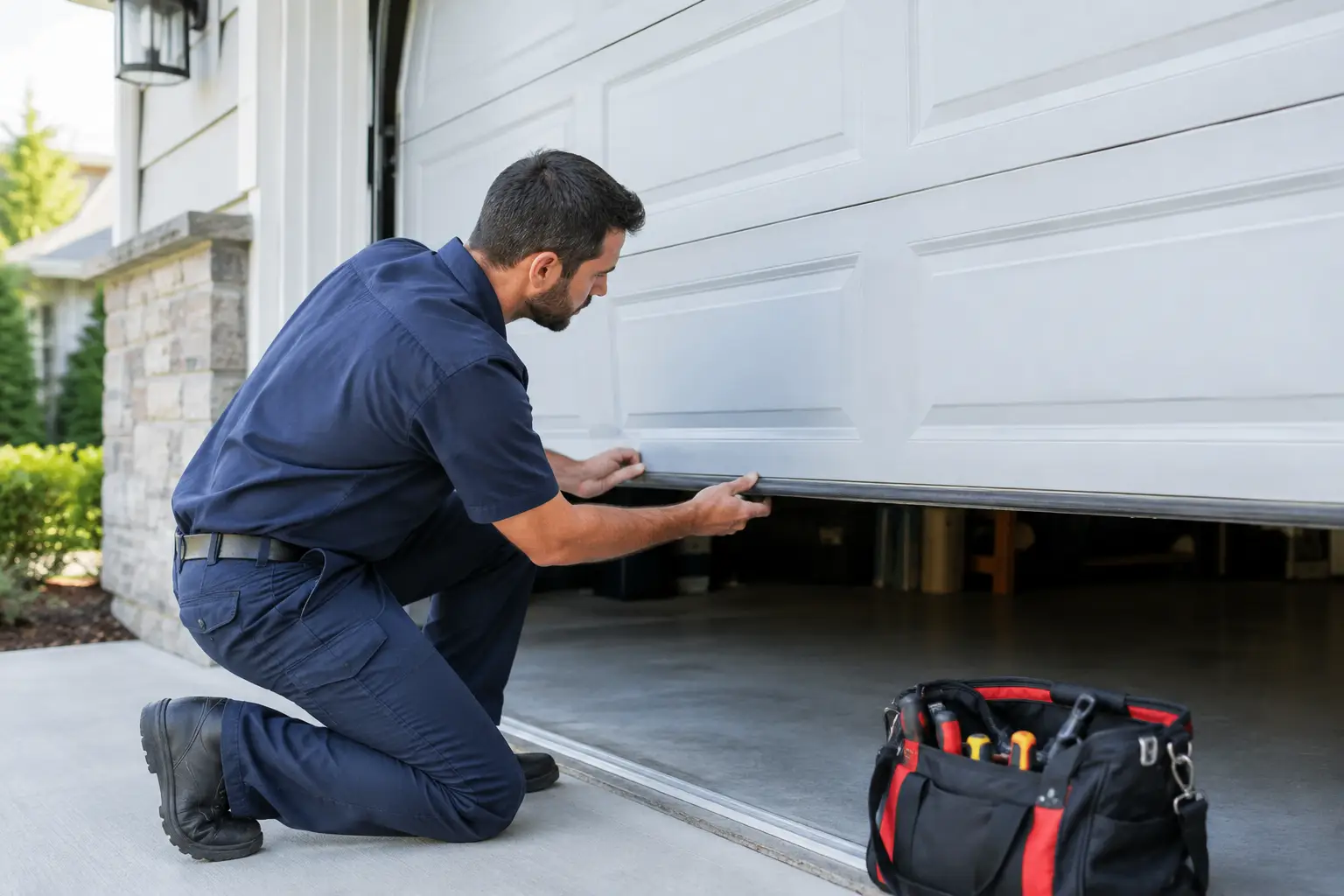
A loud bang from the garage, a door that will not close before bed, or a vehicle trapped inside is more than an inconvenience. Emergency garage door repair is about restoring safe access to your home without turning a small mechanical failure into a damaged door, broken opener, or injury.
The first rule is simple: do not force it. A residential garage door is heavy, and its springs, cables, and tracks work under serious tension. If the door is crooked, hanging low, stuck halfway, or making grinding noises, stop using the opener and keep people clear of the opening.
When a Garage Door Problem Is an Emergency
Not every noisy roller needs a middle-of-the-night service call. A squeak, minor vibration, or worn weather stripping can often wait for a scheduled repair. But some problems leave your home exposed, block your vehicle, or create a real safety concern. Those are the calls that should be handled right away.
A broken spring is one of the most common examples. Homeowners often hear a sharp bang from the garage and then find the opener can no longer lift the door. The door may feel extremely heavy by hand, and repeatedly pressing the opener button can strain or damage the motor.
A snapped cable is another urgent issue. The door may lift unevenly, hang at an angle, or come partly off its track. Do not try to pull it straight or wind the cable back onto the drum. The door can shift suddenly, especially if one side is still under tension.
An off-track door also needs quick attention. It may be sitting crooked in the opening, rubbing hard against a track, or stuck partway up. Trying to run the opener in this condition can bend tracks, damage panels, and make the eventual repair more involved.
Other situations that deserve prompt help include a door that will not close and leaves the garage exposed, a damaged bottom section that will not seal, a failed opener when the door is needed for vehicle access, or a door that has been hit by a vehicle. In winter, an open or poorly sealed garage can bring snow, water, and cold air into the space quickly.
What to Do Before Emergency Garage Door Repair Arrives
You do not need to diagnose the whole system. A few safe observations help a technician understand what is happening and arrive prepared.
First, keep the area clear. Move vehicles away from the door if it is safe to do so, and keep children and pets out of the garage. Do not stand beneath a door that is open, crooked, or supported by the opener alone.
Next, look without touching. Is there a visible gap in the spring above the door? Is a cable loose or wrapped around a drum? Are rollers out of the track? Has a panel been bent after an impact? These details are useful when you call.
If the door is fully closed and the issue is only the opener, check whether the opener has power and whether the wall control or remote batteries are the problem. You can also make sure nothing is blocking the photo-eye sensors near the floor. A dirty sensor lens, a bumped sensor bracket, or an object in the doorway can stop a door from closing.
That is where homeowner troubleshooting should end. Do not adjust spring hardware, loosen cable drums, remove bottom brackets, or try to lift a door with a broken spring. Bottom brackets and spring components can release force without warning. A repair that looked simple can become dangerous in seconds.
If the door is open and cannot be closed safely, secure the home from the interior if possible. Lock the door between the garage and house, remove accessible valuables, and avoid leaving the opening unattended. A technician can assess whether the door can be lowered safely or needs to be stabilized before repair.
The Problems That Usually Need a Technician
Garage doors use a connected system. One failed part can make another part look like the issue, which is why a proper inspection matters.
Broken torsion or extension springs
Springs carry most of the door’s weight. When one breaks, the opener may hum, stop, or lift the door only a few inches. Replacing springs requires the correct size, winding procedure, and balance check. The goal is not merely to get the door moving - it is to make sure it opens and closes evenly without overworking the opener.
Snapped cables and off-track doors
Cables can fail because of age, rust, a damaged roller, an obstruction, or a door that has become unbalanced. A technician will inspect the cables, drums, rollers, tracks, hinges, and brackets before resetting the system. Reattaching a cable without finding the reason it came loose can lead to the same failure again.
Opener, remote, and keypad failures
Sometimes the door itself is fine but the opener will not respond, reverses unexpectedly, or makes noise without moving the door. The fix may be as simple as sensor alignment, remote programming, or a worn gear. If the door is heavy because of a spring problem, however, replacing the opener will not solve the real issue.
Weather damage and failed seals
A crushed panel, bent track, broken hinge, or damaged bottom seal can be urgent when it affects security or prevents the door from closing. Ontario winters are hard on moving metal parts and rubber seals. Salt, moisture, freezing temperatures, and repeated freeze-thaw cycles can speed up wear that is not obvious during warmer months.
What a Straight Emergency Service Visit Looks Like
A good emergency repair should feel easy and simple, even when the repair itself is technical. You describe what the door is doing, receive a straightforward quote before dispatch, and a local technician arrives ready to inspect the system.
On site, the technician should identify the failed component, check related parts, explain the repair in plain language, and confirm the price before work begins. That matters because a broken cable might also reveal worn rollers or a bent track, while a broken spring may have contributed to opener strain. You deserve to know what needs fixing now and what can wait.
The repair should include a balance and safety check once the work is complete. The door should travel smoothly, sit level when closed, and reverse properly when the opener’s safety system is tested. A technician may also lubricate moving parts or point out early wear, but there should be no pressure to replace parts that are still serviceable.
At Summit Garage Door, emergency, evening, and weekend calls are handled without an added after-hours charge. The focus is to get the door safe and working the same day whenever possible, with a clear quote before a crew is sent out.
Avoiding the Next Urgent Call
Garage doors rarely fail without any warning. Slow movement, a new rattling sound, uneven closing, a visible cable fray, or an opener that strains to lift the door are signs worth addressing before the door stops altogether.
A seasonal visual check is usually enough for homeowners. Watch the door move from a safe distance, clear debris from the tracks, test the opener’s reversing feature, and look at the bottom seal for gaps that allow daylight, water, or pests inside. Keep tracks clean, but avoid coating them with heavy grease, which collects dirt and can interfere with roller movement.
Professional maintenance is especially useful for older doors, doors used several times each day, and doors exposed to winter moisture. A technician can check spring balance, cable condition, roller wear, hinge movement, track alignment, and opener force settings before a weak component becomes a locked-out driveway situation.
When a garage door fails, the fastest safe decision is usually the best one: stop using it, describe the symptoms clearly, and let a qualified technician handle the tensioned parts. Your garage door does not need a guess. It needs the right repair, done safely, so your home can close up properly again.