
A thin line of daylight under your garage door may not look urgent. After a Southern Ontario thaw, though, that small gap can let in water, road salt, cold air, insects and mice. Garage door bottom seal replacement is a straightforward repair when the door is in good shape, but choosing the wrong seal or ignoring an uneven floor can leave the same gap behind.
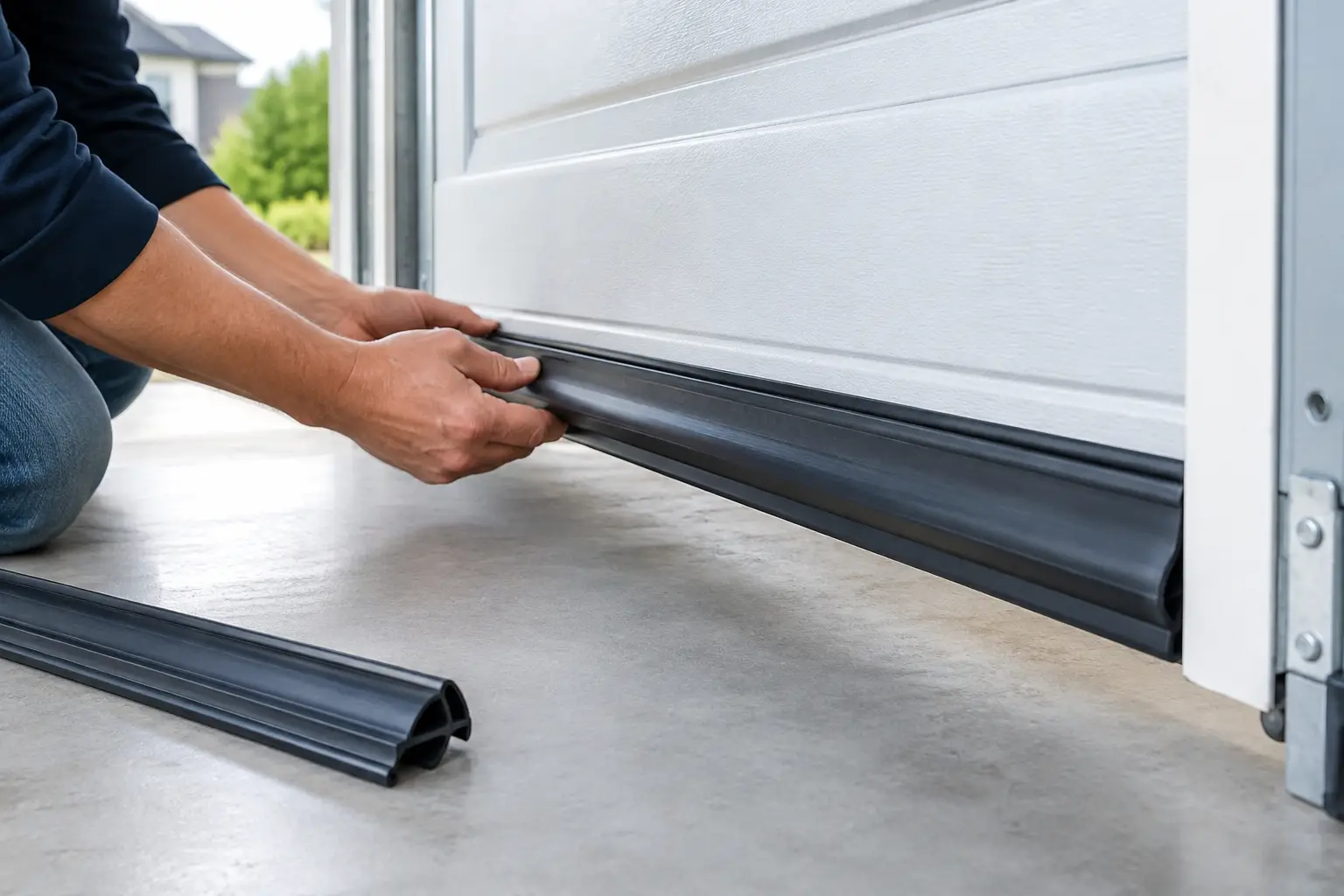
The bottom seal is the flexible strip attached along the lower edge of the door. When the door closes, it compresses against the concrete to create a weather barrier. It is not meant to make a badly fitting door disappear. It needs the right profile, a properly closing door and a floor that is reasonably level.
Signs Your Bottom Seal Is Worn Out
A seal does not need to be completely missing before it needs attention. Rubber and vinyl harden over time, especially after repeated freeze-thaw cycles. Once the material loses flexibility, it cannot press down evenly against the floor.
Look along the bottom of the closed door from inside the garage during daylight. A little light at the corners can sometimes be adjusted, but a long bright line across the opening usually means the seal is flattened, torn, cracked or the wrong size. You may also see water trails after rain, leaves blowing in, or salt-stained puddles near the threshold.
Other common signs include a brittle strip that breaks when touched, sections hanging loose from the retainer, and a door that makes a scraping or dragging sound at the floor. If you can feel a cold draft near the garage wall or find evidence of pests, the bottom seal deserves a closer look.
Do not assume every gap is a seal problem. If the door is hanging crooked, stops short of the floor, reverses unexpectedly or has loose cables, the issue may be with the springs, tracks, rollers or opener settings. Replacing the seal on a door that is not travelling correctly will not solve the real problem.
What Causes Bottom Seals to Fail in Ontario?
Most bottom seals wear out from normal use. Every opening and closing cycle rubs the material against concrete, and rough or pitted floors speed up that wear. In Cambridge, Waterloo Region, Guelph and surrounding areas, winter makes the job harder. Snow, ice, sand and road salt collect at the threshold, while sharp temperature changes make older rubber stiff and prone to splitting.
Sun exposure also matters. A door facing south or west can see more UV damage, which dries out vinyl and rubber over several seasons. A garage used for parking, storage, workshops or frequent family traffic may simply wear through its seal faster.
Sometimes the seal is still soft, but it has pulled out of its aluminum retainer. That can happen after the door catches on ice, a shovel clips the edge, or the retainer has become bent. In that case, the repair may involve more than sliding in a new strip.
Choosing the Right Garage Door Bottom Seal Replacement
There is no single universal seal that fits every residential garage door. The correct choice depends on the door's bottom retainer, the width of the opening, the size of the floor gap and the condition of the door itself.
Many steel sectional doors use a T-style seal that slides into matching channels in a retainer. Others use a bulb-style seal, a bead-style seal or an astragal design that folds and compresses differently. Older wood doors and certain custom doors may use nailed-on or screwed-on seals instead.
The profile matters as much as the length. A shallow seal will not bridge a wide gap, while an oversized bulb can drag, buckle or interfere with a smooth close. If your concrete slopes slightly, a wider seal can help in some cases. If the floor is deeply uneven or cracked across the opening, a new seal may reduce the problem without fully eliminating it. The long-term fix could involve threshold work or concrete repair.
Rubber or Vinyl?
Vinyl seals are common and cost-effective. They work well when properly fitted, but lower-quality vinyl can become stiff in cold weather. Rubber and EPDM-style materials generally stay more flexible through temperature swings and can be a better choice for exposed Ontario garages.
The right material depends on the door and budget. The main point is not to buy a random strip based only on its width. Confirm the retainer style and profile first. A seal that appears close enough can be difficult to install and may fail early.
The Retainer Can Be the Real Issue
The retainer is the metal or plastic channel that holds the seal on the bottom edge of the door. If it is corroded, crushed or bent, the new material may not slide in or stay secure. A technician may need to straighten it, replace a section, or install a new retainer before fitting the seal.
This is especially common on older doors where moisture has sat along the bottom rail for years. It is worth checking before buying a replacement, because a new seal cannot compensate for a damaged mounting channel.
Can You Replace a Garage Door Bottom Seal Yourself?
For a standard door with a sound retainer, this can be a manageable homeowner project. The door should be fully closed and unplugged from the opener so nobody operates it while you are working. Measure the existing seal and retainer carefully, clean out dirt from the channels, and use a light lubricant only if it is compatible with the seal material.
The job is easier with two people. Long seals can twist or bind while being fed through the track, and cold material is less cooperative. Warm it indoors first if possible, then trim it only after it is fully installed and sitting squarely. Leave a small amount of extra length at each end before making the final cut.
Do not loosen bottom brackets, cables or spring hardware to access the seal. Those parts are under high tension and can cause serious injury. On many doors, the seal can be changed without touching them at all. If the retainer sits behind hardware, the door is damaged, or you are unsure what you are looking at, stop there and arrange service.
When a New Seal Will Not Fix the Gap
A bottom seal works by meeting the floor evenly. If the door itself is out of alignment, it may touch on one side and leave a gap on the other. Worn rollers, bent tracks, broken hinges and loose brackets can all change how the door sits when closed.
An opener can also be set to stop too high. That may look like a seal issue, but forcing the opener to push the door lower is not always the answer. The close limit and safety system need to be checked properly, especially if the door reverses or presses hard into the concrete.
Water entering under the door may come from outside grading rather than a failed seal. If rainwater runs toward the garage, a fresh bottom strip helps only so much. Clearing the drainage path and correcting the slope may be necessary to prevent repeated puddling.
What to Expect From a Professional Repair
A proper service visit starts with the basics: checking the seal type, measuring the door, inspecting the retainer and looking at how the door meets the floor. The technician should also check whether the door is level and closing safely, rather than treating the visible gap as the only concern.
At Summit Garage Door, homeowners can describe what they see - daylight, water, drafts, pests or a torn strip - and get a straight quote before dispatch. If the issue is only the bottom seal, the repair is typically quick. If the inspection finds a bent retainer, alignment issue or worn door hardware, you should be told clearly what needs attention and why.
A good replacement leaves the seal sitting flat along the full width of the door, with enough compression to block weather without making the door bind. After installation, test the door several times and look for pinched sections or gaps at the corners.
Keep the New Seal Working Longer
A little maintenance helps. Sweep gravel, leaves and packed snow away from the threshold instead of letting the door grind over debris. Avoid chipping ice directly against the seal with a metal shovel. In winter, free the bottom edge gently if it has frozen to the floor before operating the opener.
Once or twice a year, inspect the seal and wipe away salt and dirt. While you are there, look at the bottom corners, rollers and tracks. Catching a loose seal or closing issue early is usually simpler than waiting until water is pooling inside the garage.
If your garage has become colder, wetter or easier for pests to enter, do not wait for the next heavy snow or rainstorm to find the gap. A correctly fitted bottom seal is a small repair that protects the space behind the door every day.