
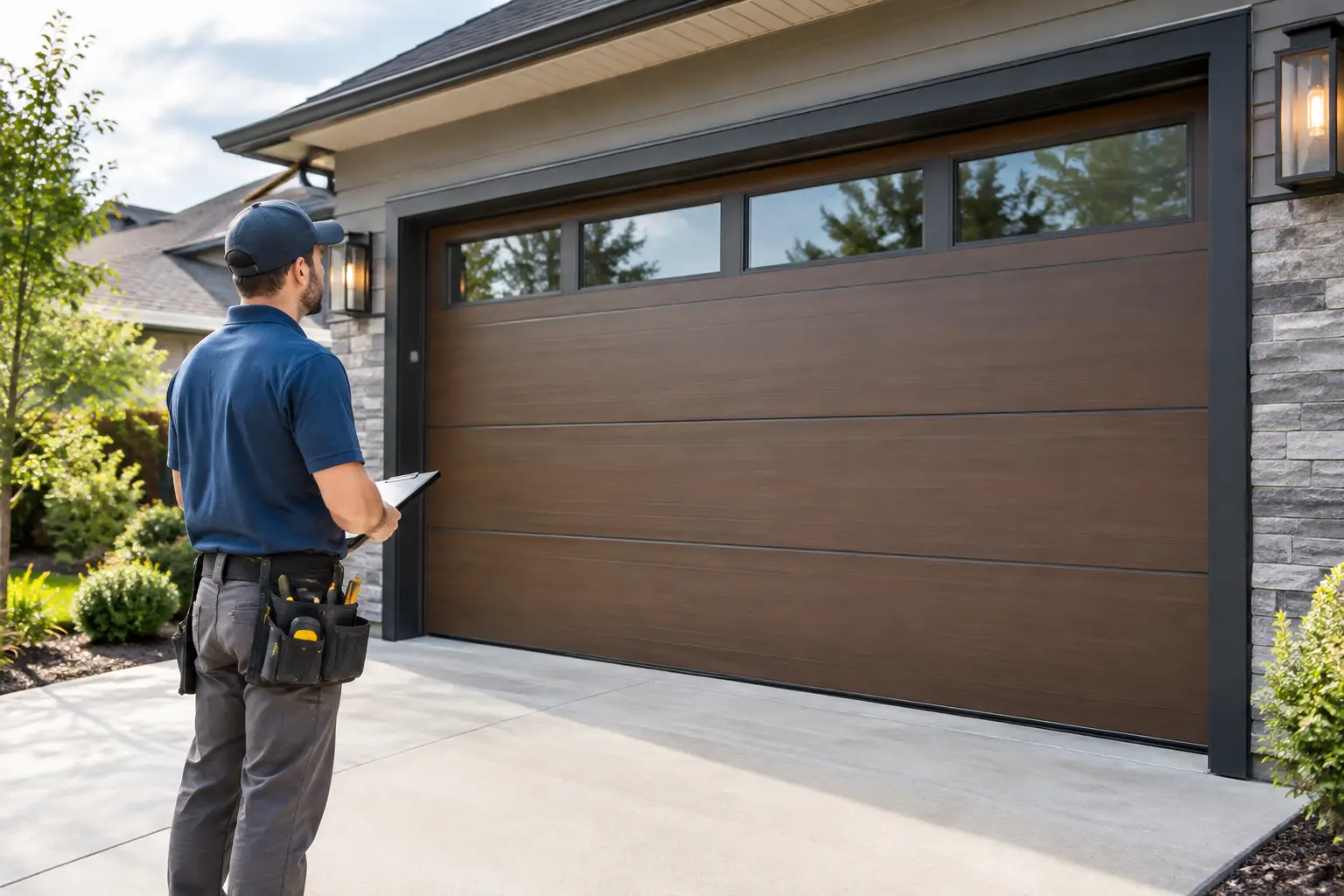
A new garage door changes more than the front of your house. Proper garage door installation affects whether your vehicle is secure, how much cold air reaches the garage, how quietly the door runs and whether it opens safely every day. If your existing door is dented, poorly insulated, hard to lift or simply past its best, the right replacement can solve several problems at once.
For homeowners in Cambridge and across Southern Ontario, the best choice is rarely just the door that looks good in a photo. Our winters, attached garages and daily vehicle use make fit, insulation and hardware just as important as the design.
Start With the Opening, Not the Door Style
A garage door has to match the opening, the available headroom above it, the room beside the tracks and the depth of the garage. Those details determine what door sections, track system, springs and opener setup will work properly.
This is why measuring only the width and height of the opening is not enough. A low ceiling, bulkhead, storage shelf, furnace duct or uneven floor can affect the installation. A professional measurement appointment catches those issues before a new door arrives, rather than turning installation day into a surprise.
The condition of the frame matters too. If the jambs are rotted, bent or out of square, a new door may not seal evenly. That can leave gaps where daylight, wind-driven snow and water get in. Sometimes the door replacement is straightforward. Other times, minor framing or trim work should be handled first so the finished installation is secure and weather-tight.
Choose a Door for Southern Ontario Weather
Garage doors come in steel, wood-look steel, aluminum and glass, wood, and other specialty materials. For many local homes, insulated steel is the practical choice. It is durable, low-maintenance and available in styles that suit everything from a newer subdivision home to an older brick property.
Insulation is worth considering, especially when the garage is attached to the house or has a bedroom above it. An insulated door helps reduce drafts and temperature swings. It will not turn an unheated garage into a finished living space, but it can make a noticeable difference during a January cold snap and help protect items stored near an exterior wall.
Look beyond the advertised R-value alone. A well-installed door with good perimeter weather stripping and a properly fitted bottom seal often performs better than a higher-rated door with gaps around it. The bottom seal is especially important on a garage floor that has settled or slopes slightly toward the driveway.
Glass sections can bring in natural light and improve curb appeal, but they involve a trade-off. More glass can mean less insulation, less privacy and more visibility into the garage. Frosted or tinted options may make sense when the door faces a busy street or sits close to a sidewalk.
Garage Door Installation Is a Safety Job
A garage door is one of the largest moving parts in your home. The door may weigh well over 100 pounds, and the springs carry a high amount of tension. That is not a place for guesswork.
During a proper installation, the crew installs the tracks, rollers, hinges, cables, drums and spring system so the door moves evenly. They set the spring tension to balance the door, meaning it should stay near the halfway point when operated manually. A door that is too heavy to lift or shoots upward is not correctly balanced.
The final setup should also include a safety check. The door needs to reverse when it contacts an obstruction, and the photo-eye sensors near the floor need to detect something in the opening. These are not optional extras. They protect children, pets, people walking through the garage and anything left near the door’s path.
Avoid reusing worn cables, bent tracks or old springs simply to save a little money during a replacement. New sections on tired hardware can lead to noisy operation, poor alignment and an early service call. In most full replacements, replacing the working system together is the sensible long-term choice.
Picking the Right Opener
If the existing opener is reliable and compatible, it may be possible to keep it. But a new door installation is often the right time to replace an older opener, particularly if it is loud, lacks safety features or struggles to lift the current door.
Belt-drive openers are popular for attached garages because they run quietly. Chain-drive units are dependable and can be a good fit where sound is less of a concern. Wall-mount openers are useful in garages with limited overhead space or homeowners who want to free up the ceiling for storage.
The opener needs enough lifting capacity for the door, but bigger is not always better. A properly balanced door should not force the opener to do all the work. The quality of the installation, the spring balance and the condition of the tracks are what keep the system running smoothly.
Modern openers can add useful convenience, such as battery backup, wireless keypads, remote controls and phone-based access. Battery backup is particularly helpful during a power outage when the garage is your main entry point. Choose features you will use, not a package full of extras you do not need.
What Happens on Installation Day
A straightforward residential replacement is often completed in one visit once the correct door is available. The crew removes the old door and hardware, installs the new system, connects and programs the opener if needed, then tests the door several times.
Before work begins, clear vehicles, bikes, boxes and tools away from the garage door area. Leave access to the electrical outlet and opener location. If you have a gate code, parking restriction or a pet that needs to stay inside, mention it when booking.
At the end of the job, ask the technician to show you the manual release, the safety sensors and how to use the remotes or keypad. You should also know what normal operation sounds like. A small amount of operating noise is normal. Grinding, banging, jerking or a door that starts hanging crooked are reasons to call for service promptly.
Price Depends on More Than the Door Panel
Homeowners often want a quick price, and they should be able to get a straight quote based on the door size, material, insulation level, windows, hardware, opener choice and condition of the existing setup. Custom sizes, carriage-house designs and glass-heavy doors generally cost more than a standard raised-panel steel door.
The cheapest quote is not always the lowest overall cost. Make sure you understand whether removal of the old door, new tracks, springs, cables, weather seals, disposal and opener setup are included. An incomplete quote can look attractive until necessary parts appear as add-ons later.
For a clear starting point, tell the service company your door width and height, whether the garage is attached, what is wrong with the current door and whether you want an opener included. A few photos of the opening, inside tracks and ceiling space can also make the initial conversation easier and more accurate.
Keep the New Door Working Properly
A new door should not need constant attention, but it does benefit from simple care. Keep the tracks clear of debris, check that the photo-eye lenses are clean and make sure the bottom seal is not torn or flattened. Do not spray heavy grease into the tracks. That can collect dirt and make the rollers run poorly.
Twice a year, watch the door move from a safe distance. If it becomes noticeably louder, slows down, reverses unexpectedly or leaves a gap at the bottom, arrange service before a small adjustment becomes a broken spring, snapped cable or off-track door.
Garage door installation is one job where correct setup pays off every time you leave for work, bring groceries home or pull in during a storm. Choose the door that suits your home, insist on safe installation and keep the hardware maintained. When the door does its job quietly and closes tight, you should not have to think about it again.