
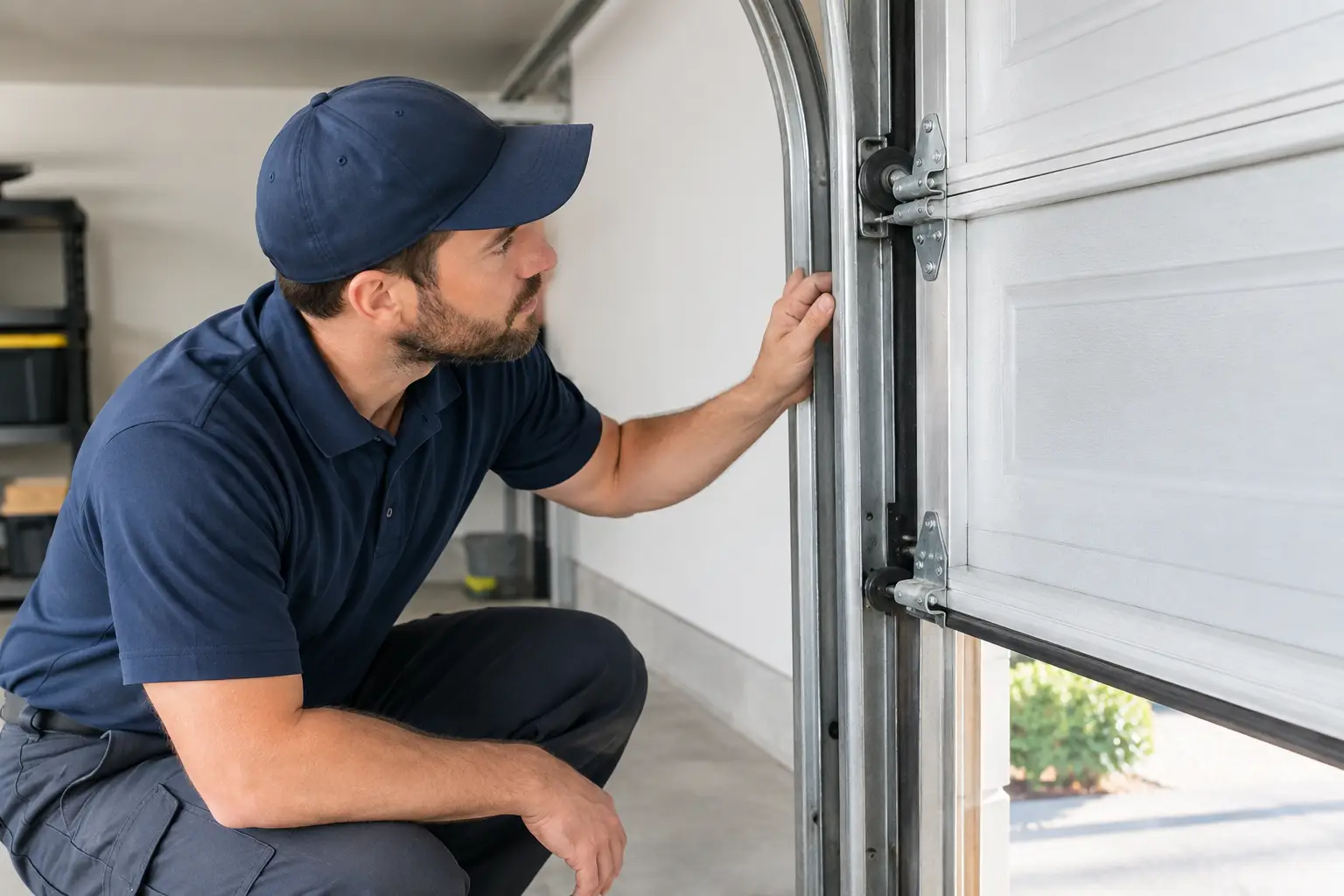
A garage door that is hanging crooked, scraping the track, or stuck halfway is not a door to force closed. One roller may have slipped out, but the door can quickly become unstable when its weight is no longer supported evenly. Garage door off track repair is usually urgent because the door may fall, damage panels, snap a cable, or leave your home and vehicle exposed.
The good news is that an experienced technician can often reset and repair an off-track door the same day. The key is stopping further damage before someone tries to pull, push, or run the opener again.
What an Off-Track Garage Door Looks Like
Sometimes the problem is obvious: a roller is sitting outside the metal track, the door is leaning to one side, or a cable is loose beside the drum. Other times, the symptoms are less clear. The door may make a grinding sound, stop after moving a few inches, or bind badly near the bottom.
Look from a safe distance. If one side is lower than the other, if a track is bent away from the wall, or if the door has come out of the opening at an angle, treat it as an off-track issue. Do not stand under the door to inspect it closely.
A door can also come off track after a vehicle bumps it, even at low speed. A dented bottom section, twisted hinge, bent track, or damaged roller may not look serious at first. But garage doors rely on all parts moving in alignment. A small impact can create enough resistance to pull a roller free the next time the door operates.
What to Do Before Garage Door Off Track Repair
First, stop using the opener. Press the wall button only if needed to stop the door's movement, then keep everyone away from the area. If the door is open or partly open, do not pull the emergency release cord unless a technician tells you to. Disconnecting the opener does not make a crooked, heavy door safe to handle.
Do not try to lift the door manually, push the roller back into place, or hammer a bent track straight. Those common fixes can make a manageable repair much larger. The door's springs and cables are under serious tension, and a door that looks stuck can shift suddenly once pressure is released.
If your vehicle is trapped inside, it is understandable to want a quick workaround. Still, forcing the door is not worth the risk of a falling door, damaged vehicle, or injured hand. Tell the repair company what the door is doing, whether it is open or closed, and whether you can see a loose cable or broken part. That helps them arrive prepared and give you a straight quote before dispatch.
Why Garage Doors Come Off Their Tracks
An off-track door is usually the result of another worn, damaged, or misaligned part. Resetting the roller without fixing the cause means the same problem can happen again.
A snapped or loose lift cable
Lift cables work with the springs to raise and lower the door evenly. When one cable comes off its drum or snaps, one side of the door loses support. The door may hang crooked, jam in the tracks, or pull multiple rollers out.
Cable problems often appear after a door has been operated with a broken spring, but they can also happen when a track is damaged or the door is forced while blocked by ice, snow, or an object on the floor.
Bent tracks, brackets, or hinges
Tracks must be properly spaced and securely fastened to the wall and ceiling. A loose bracket can let the track spread apart. A vehicle strike can bend the vertical track near the floor. Worn hinges can let a roller sit at the wrong angle.
Depending on the damage, a technician may realign the existing track or replace the affected section. A track that is deeply creased, split, or repeatedly bending usually needs replacement rather than another adjustment.
Worn or broken rollers
Rollers guide the door through the tracks. When they crack, seize, lose a wheel, or wear down, they can bind and climb out of the track. Older steel rollers are often noisy before they fail, while nylon rollers may crack after years of daily use and cold-weather wear.
Replacing a few damaged rollers is often sensible. If the door has several worn rollers and noisy hinges, replacing the full set can provide smoother operation and reduce strain on the opener.
A door that is out of balance
A balanced garage door should stay near the halfway point when disconnected from the opener and tested by a trained person. If it races upward, drops heavily, or needs the opener to do all the lifting, the spring system may be wrong, worn, or broken.
This matters because an opener is designed to guide the door, not lift excessive weight. Continuing to operate an unbalanced door can strain the motor, pull cables out of position, and contribute to an off-track failure.
What a Professional Repair Should Include
Proper off-track repair is more than putting a roller back where it belongs. The technician should first secure the door so it cannot move unexpectedly. They can then assess the tracks, rollers, hinges, brackets, cables, drums, springs, and opener arm for the original cause.
The repair may involve straightening or replacing a track section, resetting rollers, installing new rollers or hinges, repairing cable issues, and adjusting the door's alignment. If the cable came off because a spring failed, the spring repair has to be handled first. If a panel is badly bent, the technician will explain whether a panel replacement is practical or whether the door's structure has been compromised.
Once the mechanical work is complete, the door should be tested through a full open and close cycle. It should run smoothly, sit level when closed, and reverse properly when the opener's safety system is tested. A good repair also includes checking the opener's force settings so it is not pushing against a door that still has resistance.
The final scope depends on what caused the failure. A single popped roller after a minor bump is different from a door with a broken spring, loose cable, bent track, and damaged bottom panel. Clear pricing before work begins matters because homeowners should know whether the repair is a small adjustment or a multi-part mechanical fix.
Can You Repair an Off-Track Door Yourself?
Light maintenance is reasonable for many homeowners. Keeping the area around the tracks clear, checking for loose visible hardware, and watching for unusual noise can help you catch trouble early. You can also avoid pressure-washing lubricant away from moving parts and make sure snow, ice, and stored items are not blocking the door's path.
But an off-track door is not a good do-it-yourself repair. Tracks can be sharp, the door is heavy, and the spring and cable system stores energy that can cause serious injury. Online videos may show a quick roller reset, but they cannot tell you whether the cable is under tension, the spring is failing, or the door is about to shift.
The safest choice is to leave the door in place and arrange service. Summit Garage Door provides same-day and 24/7 help across Cambridge and surrounding Southern Ontario communities, with no added charge for evening or weekend calls.
How to Help Prevent Another Off-Track Problem
Pay attention when the door changes behaviour. A new squeal, grinding sound, hesitation, uneven movement, or need to press the opener twice is a reason to have it checked before it becomes an emergency. Garage doors rarely fail without giving some warning.
Avoid using the door when there is ice at the bottom seal or an object in its path. Never drive into the door before it has fully opened, and do not let children hang from it or pull on the emergency release. If a roller, hinge, or cable looks damaged, stop operating the door instead of waiting for it to fail completely.
A crooked garage door can make a normal day stop fast. Keep clear of it, resist the urge to force it back into place, and get the cause repaired properly. That is the quickest path to a door that closes securely and works the way it should.