
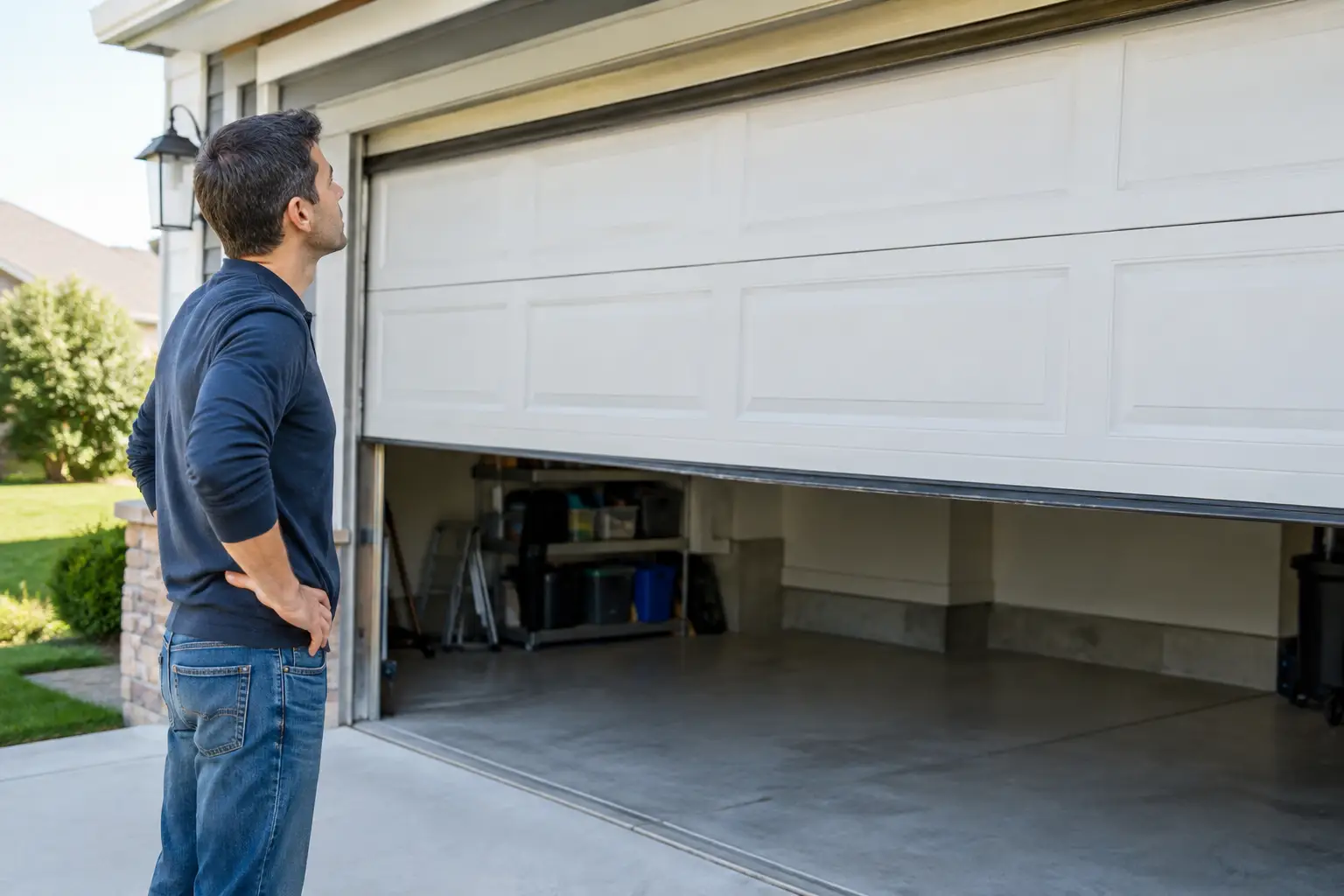
A garage door stuck halfway open is more than an annoyance when you are trying to leave for work or get the car in before a storm. It can leave your home exposed, trap a vehicle inside, and create a real safety risk if the door is hanging unevenly. The good news is that the way the door is sitting usually tells you something about the problem.
Do not keep pressing the opener button hoping it will force its way through. Garage doors are heavy, and the system that lifts them is under high tension. A quick look, a few safe checks, and a straight description of what the door is doing can help get the right repair done quickly.
Why a garage door gets stuck halfway open
A door that stops in the middle is usually dealing with a mechanical issue, not just a stubborn remote. The most common causes are a broken spring, a slipped or snapped cable, a door that has come off its track, damaged rollers, or an opener that cannot handle the load anymore.
The position of the door matters. If it is level but will not move in either direction, the opener or safety system may be the issue. If one side is higher than the other, a cable, roller, track, or spring problem is much more likely. A crooked door should be treated as urgent because operating it can pull the door farther off track.
Ontario weather can make existing wear show up fast. Cold temperatures stiffen moving parts, moisture can affect tracks and hardware, and repeated freeze-thaw cycles can leave a bottom seal stuck to the floor. That said, a frozen seal alone usually does not explain a door that remains suspended halfway up.
A broken spring
Torsion springs sit above the door, while extension springs run alongside the horizontal tracks. Both counterbalance the weight of the door so the opener does not have to lift hundreds of pounds on its own. When a spring breaks, homeowners often hear a loud bang in the garage.
A broken torsion spring may have a visible gap in the coil. With extension springs, the damage can be less obvious. Either way, the opener may lift the door only partway, strain loudly, or reverse because the door suddenly feels far too heavy. Do not try to lift the door by hand or wind a replacement spring yourself. Spring repairs require the right tools and training.
A snapped or loose lift cable
Lift cables run from the bottom brackets of the door to the spring system. If one cable comes off the drum, frays, or snaps, the door may rise crooked and stop halfway. You may see a loose cable hanging near the side of the door, or notice that one side has dropped lower than the other.
This is not a reset-and-try-again situation. Continuing to run the opener can bend tracks, damage panels, and make the door harder to secure. Keep people away from the opening and arrange a repair.
Rollers, tracks, and hinges that are binding
Rollers guide the door through the tracks as it opens and closes. Worn rollers, a bent track, loose bracket, or damaged hinge can cause the door to bind at one particular spot. Sometimes there is grinding, scraping, or a sharp popping sound before the door stops.
Small alignment issues can become bigger ones quickly. Tracks are not meant to be bent back by force, and loosening the wrong bracket can release spring tension. A technician can inspect the full travel of the door, correct the alignment, and replace worn parts without creating another problem.
An opener issue or safety reversal
If the door moves smoothly by hand when disconnected from the opener, the door itself may be fine and the opener may be the cause. A worn gear, failed motor, damaged chain or belt, travel-limit setting, or electrical issue can stop the system mid-cycle.
Photo-eye sensors more commonly affect closing than opening, but they are still worth checking. Make sure the sensors near the floor are clean, facing one another, and not blocked by storage, snow, or a bin. If the door stops while opening, however, do not assume the sensors are the answer. Mechanical faults are more common.
What to do when your garage door is stuck halfway open
Start by stopping the opener. Do not keep cycling it, and do not let children or pets near the opening. If the door is crooked, has a loose cable, or appears to be off track, leave it exactly where it is if possible. Trying to pull it down can make an unstable door fall or shift suddenly.
Next, look without touching. Check for a gap in the spring above the door, a cable hanging loose, rollers outside the track, or anything blocking the tracks. Note whether you heard a bang, whether the opener hums, and whether the door is level. Those details make it easier for a repair technician to identify the likely issue before arrival.
If the door is level and fully supported, you can check the obvious items: confirm the opener has power, replace a remote battery if needed, and clear visible debris from the sensor area. Avoid pulling the emergency-release cord while the door is halfway open. Disconnecting the opener can leave the door unsupported, especially if a spring or cable has failed.
When the garage is exposed, use a safe temporary plan rather than forcing the door shut. Move valuables away from the opening if you can do so safely, keep the interior door to the home locked, and avoid leaving the property unattended for long. If your vehicle is trapped, do not try to drive under a partially open door.
When it is safe to use the manual release
The manual release is useful only when the door is fully closed, or when it is fully open and securely supported. It disconnects the door from the opener so it can be moved by hand during a power outage or opener failure.
It is not a solution for a door hanging halfway. If the counterbalance system has failed, the full weight of the door may be waiting on the other side of that red release cord. A technician can secure the door first, diagnose the cause, and get it moving properly again.
What a professional repair should include
A proper repair is more than getting the door to move once. The technician should identify why it stopped, inspect related components, and test the door through a full open-and-close cycle. If a spring has broken, the door should be balanced after replacement. If a cable has come off, the drums, bottom brackets, tracks, rollers, and spring tension all need to be checked.
Ask for a clear quote before work begins and an explanation in plain language. You should know whether the repair is a spring, cable, roller, track, opener, or panel issue, and whether any additional worn parts are genuinely needed. A good repair leaves the door running smoothly and safely, not just temporarily moving again.
For homeowners in Cambridge and surrounding Southern Ontario communities, Summit Garage Door provides same-day help for stuck, off-track, and unsafe residential doors, including evenings and weekends without an added emergency charge. Tell the team what the door is doing, whether it is crooked, and what you heard before it stopped. That gives them a strong start before they arrive.
Can you prevent it from happening again?
Some failures come without warning, especially springs near the end of their service life. Still, a few simple habits can catch trouble earlier. Listen for new grinding or squealing, watch for a door that shakes or rises unevenly, and do not ignore a door that feels heavier than usual. Those are often early signs of roller, cable, spring, or track wear.
Keep the track area clear and avoid coating tracks with heavy grease, which collects dirt. Garage-door lubricant belongs on moving hinges, rollers with metal bearings, and spring coils when appropriate, but it will not fix a bent track or worn cable. If the bottom seal freezes to the concrete in winter, free it gently before running the opener rather than making the motor pull against it.
A stuck garage door rarely gets better with more force. If it is hanging crooked, making a loud strain, or stopped halfway with no clear reason, leave it alone and have the system checked. The right repair now can prevent a damaged door, a trapped vehicle, and a much larger fix later.