
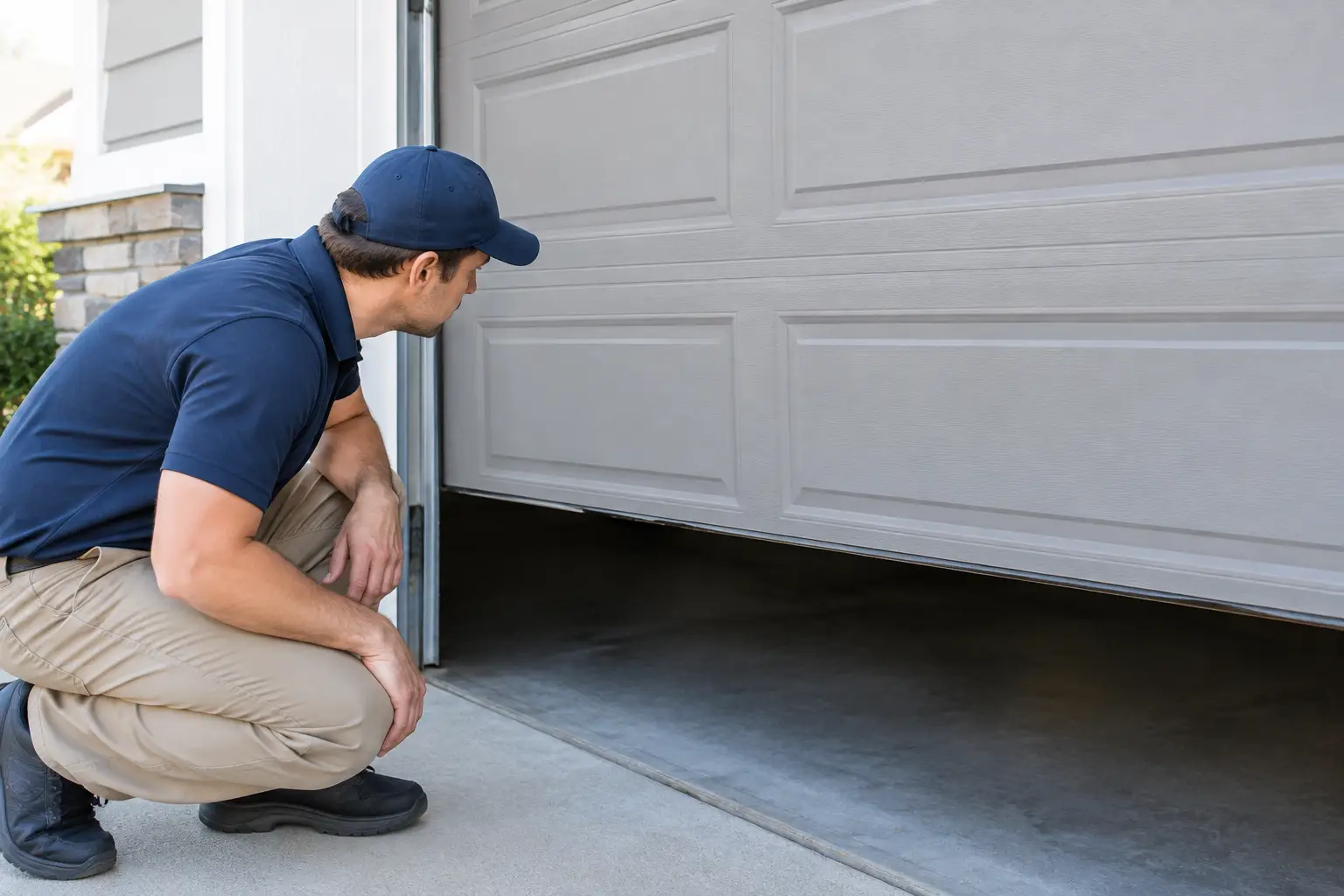
A garage door that stops a few inches above the floor leaves more than an annoying gap. It can let in cold air, rain, pests, and daylight, and it may leave your home or belongings exposed. If your garage door won't close fully, do not keep forcing the opener button until it goes down. The way the door behaves can tell you whether you are dealing with a simple sensor issue or a mechanical problem that needs repair today.
First, Look at How the Door Is Failing
The details matter. A door that closes almost all the way, then reverses back up, usually points to photo-eye sensors or the opener's closing-force settings. A door that hangs crooked, shakes, scrapes, or stops partway down may have a cable, roller, track, or spring problem.
Take a quick look from a safe distance before trying anything else. Is one side lower than the other? Did you hear a loud bang before the problem started? Is there a loose cable near the drum above the door? Is an object, snow buildup, or ice blocking the bottom of the opening?
If the door is visibly crooked or a cable is loose, stop using it. Do not pull the emergency release or try to push the door shut by hand. Garage doors are heavy, and their springs and cables carry serious tension.
Why a Garage Door Won't Close Fully
Photo-Eye Sensors Are Blocked or Out of Alignment
The small sensors near the bottom of each side of the garage door track are one of the most common causes. They send an invisible beam across the opening. If that beam is interrupted, the opener assumes something is in the way and reverses the door.
A leaf, box, shovel, cobweb, or even a buildup of road salt and dust can block the sensor lens. In Southern Ontario winters, slush and grime around the garage entrance make this especially common. Gently wipe both lenses with a soft cloth and check that neither sensor has been bumped out of position.
Most sensors have a small indicator light. If one light is off or flickering, the sensors may not be aligned. Make sure both units are pointed directly at each other and that their mounting brackets are not bent.
Ice, Debris, or a Damaged Bottom Seal Is Stopping It
When temperatures drop below freezing, water can collect under the bottom seal and freeze the door to the concrete. The opener may strain, stop, or reverse rather than pull the door through the ice. Never use the opener repeatedly against a frozen door. That can strip gears or damage the opener arm.
Clear loose snow, ice, gravel, and debris from the threshold. If the rubber bottom seal is torn, stiff, or folded underneath the door, it can also prevent a proper close. A worn seal is not only a weather issue. It can catch on an uneven floor and make the opener think it has hit an obstruction.
The Close Limit Needs Adjustment
If the door runs smoothly but stops at exactly the same spot above the floor every time, the opener's close limit may be set incorrectly. The close limit tells the motor where the floor is. When that setting shifts, the door can stop short and leave a gap.
This sometimes happens after an opener installation, a power outage, or a change in the door's movement. Many openers have adjustment controls on the motor unit, but the method differs by make and model. Small adjustments are fine when the door is otherwise moving evenly and quietly. If the door is binding, jerking, or reversing unpredictably, do not treat it as a limit-setting problem until the mechanical side has been checked.
Bent Tracks, Worn Rollers, or Loose Hardware Create Resistance
Your garage door needs to travel in a straight, balanced path. A bent track, cracked roller, loose hinge, or shifted bracket can add enough resistance that the opener cannot finish the closing cycle.
You may hear scraping, popping, grinding, or a repeated squeal as the door moves. Sometimes the door gets farther down on one side than the other. In those cases, the opener is only showing the symptom. The track and door hardware need attention before the motor is damaged.
Do not hammer tracks back into place or loosen the brackets that connect the tracks to the wall. Those parts help support the door's path and can move suddenly under load.
A Broken Spring or Snapped Cable Is Making the Door Unsafe
A loud bang from the garage is often a broken torsion spring. You may also see a gap in the spring above the door. Extension springs run along the horizontal tracks and can fail as well.
When a spring breaks, the opener may still make noise, but it no longer has the spring assistance required to move the door safely. A snapped or loose cable can cause one side of the door to drop, leaving it crooked or jammed in the tracks. Both problems require professional repair. Trying to run the opener can turn a straightforward spring or cable replacement into a damaged door, bent tracks, or a failed opener.
Safe Checks You Can Make Before Calling
A few checks can save time, but only if the door is level and there is no sign of broken hardware. Start by removing anything sitting in the doorway and cleaning the sensor lenses. Check for ice along the floor and make sure nothing is leaning against the tracks or interrupting the photo-eye beam.
Then try one closing cycle while watching from inside the garage. Do not stand beneath the moving door. If it reverses near the floor, watch whether the opener lights flash or whether a sensor light goes out. That information helps identify the issue quickly.
Stop and arrange service right away if you notice any of the following:
- The door is hanging unevenly or one side is lower than the other.
- A cable is loose, frayed, or wrapped incorrectly around the drum.
- You heard a loud bang and the door now feels unusually heavy.
- The door is off its track, rubbing hard, or making grinding noises.
- The opener hums but the door barely moves or will not move at all.
Do not disconnect a damaged door from the opener to “see if it will close manually.” A balanced door can be tested safely by a technician, but a door with a broken spring or cable can fall or shift without warning.
When the Opener Is the Problem
Not every closing issue is caused by the door itself. An opener can develop worn gears, a faulty logic board, stripped sprockets, or a failing travel module. Older units may also struggle when a door has become heavier due to worn rollers, poor lubrication, or spring fatigue.
The trade-off is simple: an opener adjustment can be a sensible repair if the door is in good mechanical condition. Replacing an opener without correcting a dragging track or broken spring will only put the same strain on the new unit. A proper service visit checks both the operator and the door system so the actual cause gets fixed.
If the garage door is stuck open and you cannot secure the home, treat it as an urgent repair. Avoid leaving the door partially open overnight, particularly during wet or freezing weather. If it is safe to do so, keep people and vehicles clear of the opening until help arrives.
Get the Right Fix, Not a Guess
A garage door that will not close is often repairable the same day, whether the cause is misaligned sensors, a damaged bottom seal, a failed opener, or a broken cable. The key is not forcing the system after it has told you something is wrong.
Tell the technician what the door is doing: where it stops, whether it reverses, what sounds you heard, and whether it is sitting crooked. That makes it easier to provide a straight quote and bring the right parts. Summit Garage Door helps homeowners across Cambridge and surrounding Southern Ontario communities get the door secure again without added evening or weekend charges.
Your garage door should close smoothly, sit level on the floor, and keep the weather outside. If it does not, stop the repeated opener cycles and get the problem checked before a small issue becomes a much bigger repair.