
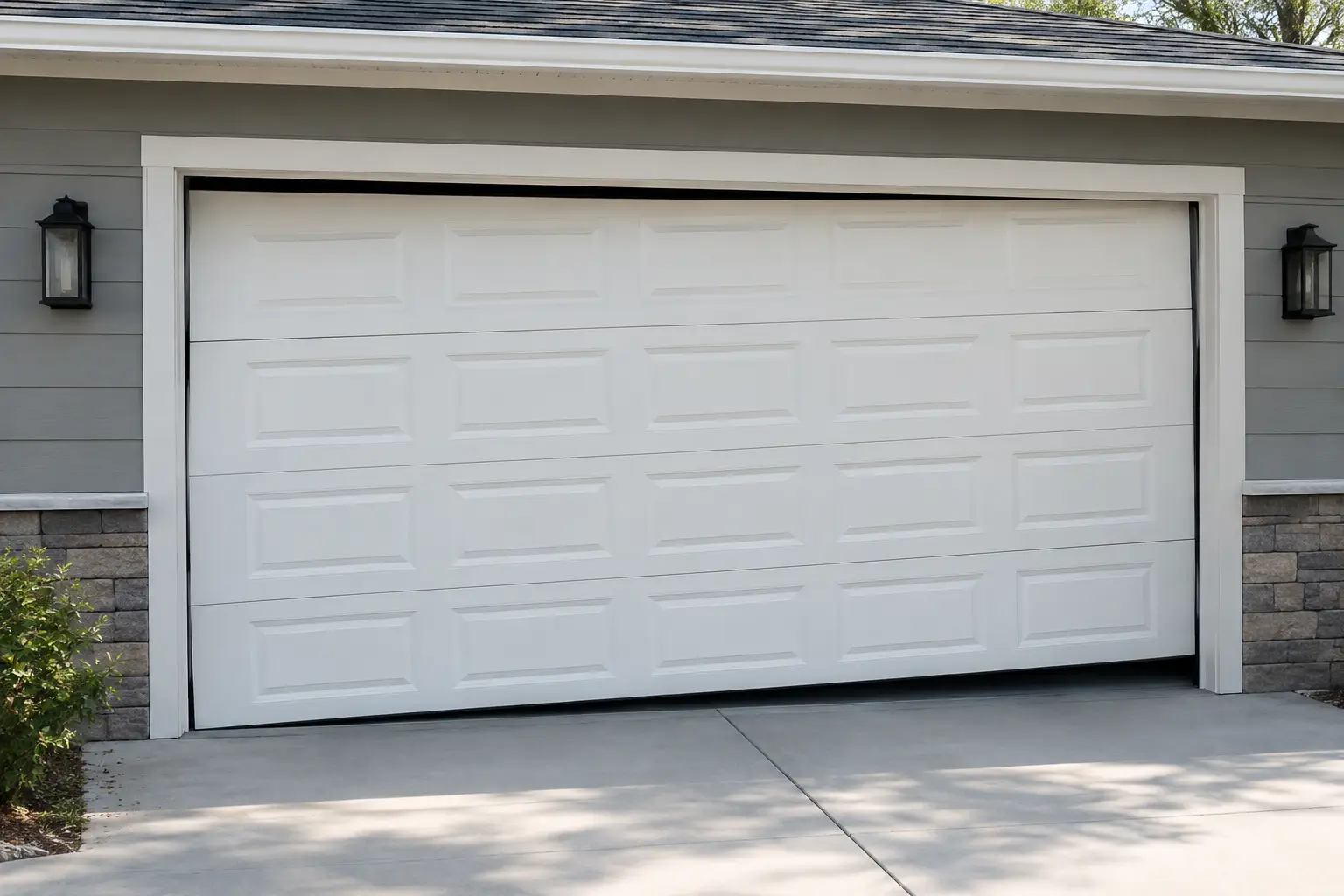
A garage door that starts lifting at an angle, hangs lower on one side, or stops halfway is not just an annoying look. If you are asking, "why is my garage door crooked," there is usually a mechanical reason behind it - and continuing to run it can turn a straightforward repair into a damaged door, opener, or vehicle.
A garage door is heavy. Its springs, cables, rollers, tracks, hinges, and opener all need to work together so the door rises evenly. When one part fails, the door can twist, bind, or come off its normal path. The safest move is to stop operating it and find out what has changed before forcing it open or closed.
Why Is My Garage Door Crooked? Start With the Most Likely Cause
The most common reason is a problem with a lift cable. There is a cable on each side of the door, and each one helps carry the door's weight. If one cable snaps, slips off the drum, frays badly, or loses tension, one side of the door will rise while the other stays down. You may see a loose cable near the track or a door that looks noticeably slanted in the opening.
A broken spring can cause a similar problem. Torsion springs sit above the garage door, while extension springs run along the sides of the door. Their job is to counterbalance the door's weight. When a spring breaks, the opener and remaining hardware are suddenly dealing with much more load than they were designed for. In some cases, the door may lift unevenly because one side is no longer properly supported.
You may have heard a loud bang from the garage before the door became crooked. That sound is often a spring breaking. It can be startling, but it does not always mean something hit the door. A broken spring should be treated as a repair issue, not a reason to keep pressing the opener button and hope it resets itself.
A Bent Track, Bad Roller, or Loose Bracket Can Pull the Door Sideways
Your garage door rollers travel inside metal tracks on both sides of the opening. If a roller breaks, seizes, pops out, or catches on a dented section of track, the door can pull toward one side. A vehicle bump, a hockey puck, shifting hardware, or years of wear can all leave a track slightly bent. Even a small bend matters when a heavy door is trying to move through it.
Loose hinges and brackets can also let a door section move where it should not. You may notice a gap between sections, a roller sitting at an odd angle, scraping metal sounds, or one side of the door dragging. In Southern Ontario, repeated freeze-thaw cycles, moisture, salt brought in on vehicles, and normal vibration can speed up corrosion and loosen hardware over time.
Tracks sometimes look like the obvious problem when they are actually reacting to a cable or spring failure. That distinction matters. Straightening a track without correcting the failed cable, spring, or bracket behind the issue will not make the door safe to use.
An Obstruction Can Create a Crooked Door Quickly
A shovel, recycling bin, child’s toy, packed snow, or a chunk of ice under one corner can stop one side of the door first. The opener may keep pushing, causing the door to twist. This is especially common in winter when slush freezes along the bottom seal overnight.
Check from a safe distance for anything under the door or caught in the tracks. If the door is still mostly straight and simply will not close because of ice, do not force it with the opener. Clear what you can safely reach, but do not chip aggressively around cables, rollers, or the bottom brackets. Those parts are under tension.
Damage to a Door Section Changes How It Carries Weight
A dented or cracked garage door panel can affect how the whole door moves. Steel doors can bend after an impact, while older wood doors may swell, crack, or lose strength around hinges. If the bottom section is damaged, the door may no longer sit squarely on the floor. If a middle section is bent, it may bind as it moves through the curved part of the track.
Panel damage does not always mean you need a new garage door. It depends on where the damage is, whether the section is still structurally sound, and whether the model can still be matched. A technician can assess whether a panel replacement makes sense or whether the door has enough damage that replacement is the more reliable option.
What to Do When Your Garage Door Is Hanging Crooked
First, stop using the opener. Pressing the remote again can pull the door farther off track, strip opener gears, snap a remaining cable, or bend panels. If the door is open or partly open, keep people, pets, and vehicles away from the opening. A crooked door can shift suddenly.
Do not try to pull the door straight by hand. Do not loosen the bottom brackets, remove a cable, adjust spring hardware, or use pliers on the torsion shaft. Those repairs involve stored spring tension and are not safe DIY jobs. Also avoid pulling the red emergency release when the door is open and uneven. Releasing it can leave the full weight of the door unsupported.
If the door is closed and secure, leave it closed. If it is stuck open and you need to protect the garage, call for service rather than trying to force it down. Let the technician know whether the door is open, closed, or hanging partway, whether you heard a bang, and whether you can see a loose cable or roller. A clear description helps identify the likely repair before anyone arrives.
How a Technician Repairs a Crooked Garage Door
A proper repair starts by securing the door so it cannot drop or move unexpectedly. The technician then checks the cables, spring system, drums, rollers, tracks, hinges, brackets, and door sections to find the actual cause. The opener is checked too, but it is often not the original problem. Openers move the door. Springs and cables carry and balance its weight.
For a slipped or snapped cable, the door may need to be levelled, the cable replaced or reset on the drum, and the spring tension corrected. For an off-track door, damaged rollers or bent track sections may need replacement before the door can be safely reset. If a spring has broken, it should be replaced with the correct type and size for that specific door.
Once the repair is complete, the door should move evenly by hand and travel smoothly with the opener. The technician should also check the opener's force settings and safety reversal system. A door that looks straight but is still poorly balanced will keep putting unnecessary strain on the opener.
Can You Prevent It From Happening Again?
Some failures come without warning, especially when an older spring reaches the end of its cycle life. Still, regular attention can catch smaller issues early. Listen for scraping, popping, grinding, or a change in how fast one side moves. Watch the door from inside the garage once in a while. It should rise and lower evenly, without wobbling or leaving a roller out of the track.
Keep the track area clear, especially after snowfalls. Do not park close enough to bump the door, and avoid hanging heavy items from track supports. If you notice frayed cables, loose hardware, damaged rollers, or daylight around a warped panel, arrange a repair before the door becomes stuck at the worst possible time.
For homeowners in Cambridge and across Southern Ontario, Summit Garage Door can provide a straight quote before dispatch and repair the issue the same day whenever possible. There is no benefit in guessing at a crooked garage door or trying to muscle it back into place. Tell the technician what the door is doing, keep the area clear, and let the right repair get your garage secure again.