
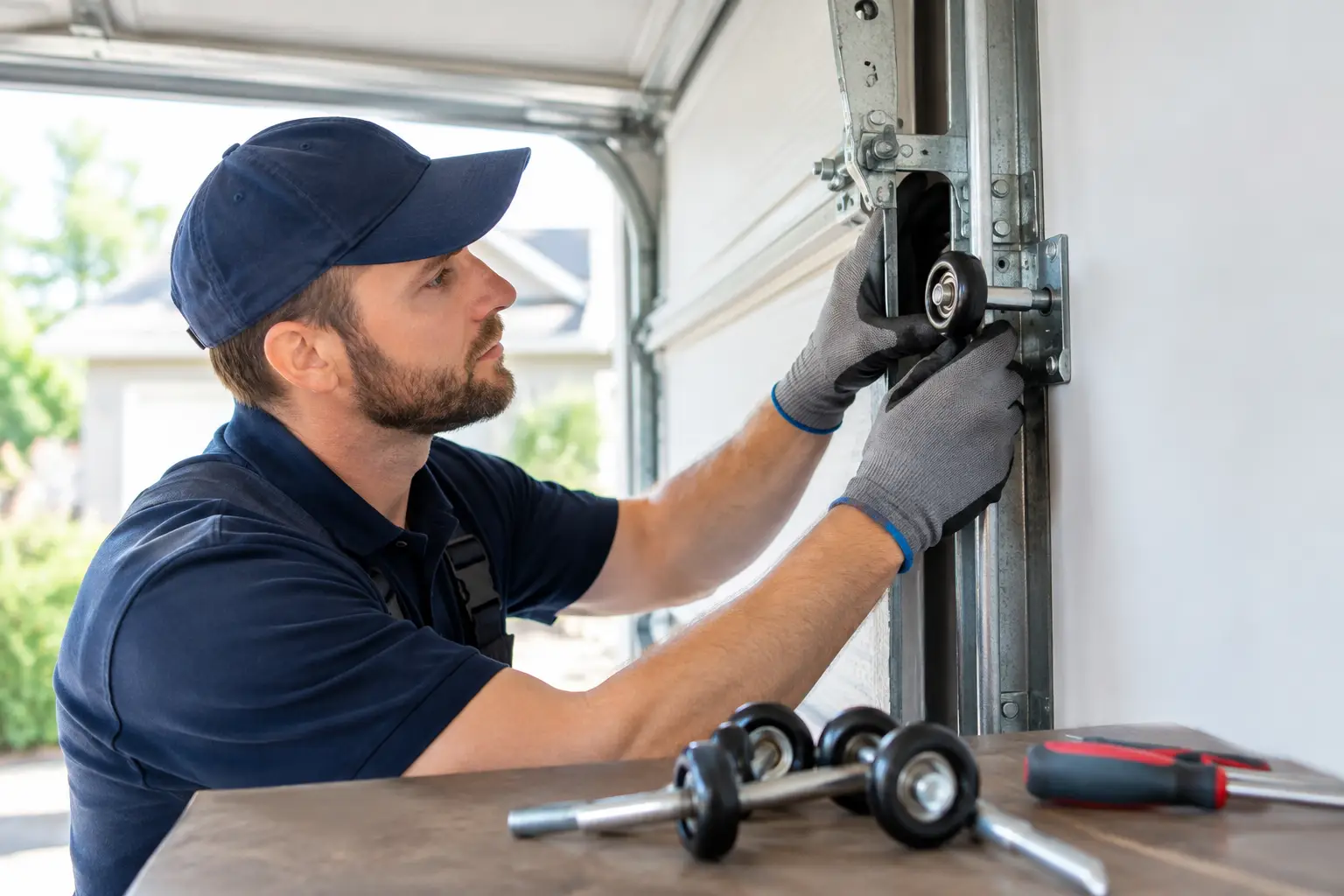
A garage door that rattles, jerks, or sounds like it is dragging across gravel often has worn rollers. The garage door roller replacement cost is usually manageable when the problem is caught early. Leave it too long, and a small rolling issue can turn into a bent track, damaged hinge, cable trouble, or a door that comes off track.
For homeowners in Cambridge and across Southern Ontario, most roller replacement jobs fall somewhere between a straightforward tune-up and a more involved repair. The right price depends on the door, the rollers fitted, and whether the rollers are the only problem.
What does garage door roller replacement cost?
For a typical residential garage door in Ontario, replacing rollers commonly costs about $150 to $400+, including parts and professional labour. That is a useful starting range, not a one-size-fits-all quote.
A standard single-car door may need around 10 rollers. A double door often has 12 to 16, depending on its design. Basic steel rollers cost less than higher-quality nylon rollers, while specialty rollers, heavy insulated doors, and repairs involving seized hardware can raise the total.
If the door is still running smoothly enough to open and close safely, the technician can usually replace the rollers as a planned repair. If it is crooked, binding hard, or off track, the appointment may involve more than rollers. In that case, the price should reflect the actual work needed to make the door safe again.
The best approach is simple: tell the company what the door is doing, whether it opens at all, and whether you can see a roller out of the track. A straight quote before dispatch helps you decide what makes sense.
Why roller type changes the price
Not all garage door rollers are built the same. The least expensive option is often a steel roller. Steel can work well, but it tends to be noisier and may need more regular lubrication. In a garage beside a bedroom, that metal-on-metal sound becomes noticeable fast.
Nylon rollers are a popular upgrade for residential doors. Quality nylon rollers generally run quieter, resist corrosion better, and help the door travel more smoothly through the tracks. They often cost more up front, but many homeowners prefer them for attached garages and daily-use doors.
There are also rollers with sealed bearings. These are designed for smoother, longer-lasting operation and can be worthwhile on a heavy double door or a door used several times a day. They are not automatically necessary for every home. A good technician should explain the options without trying to sell you the most expensive part on the truck.
In Southern Ontario, winter is part of the calculation. Moisture, road salt brought in by vehicles, freezing temperatures, and repeated temperature swings can speed up wear on metal components. A roller that has started rusting or grinding will not improve once the cold weather arrives.
Basic rollers versus upgraded rollers
Basic rollers can be the sensible choice when a door is older, lightly used, and otherwise in good condition. Upgraded nylon rollers make more sense when noise is a concern, the door is heavy, or you want to reduce ongoing wear on the tracks and hinges.
The important part is matching the roller to the door. Installing a cheap roller that does not fit correctly can cause more trouble than it saves.
What affects the final price?
The number of rollers is only one part of the bill. Labour time and the condition of the rest of the door matter just as much.
A roller may fail because its bearing has worn out, but it can also fail because the hinge holding it is bent, the track is damaged, or the door has been running out of alignment. If a roller has popped out, the technician needs to find out why before simply snapping it back in.
The final roller replacement cost can increase when:
- the door is off track or hanging crooked
- rollers are seized, broken, or difficult to remove
- hinges, brackets, or tracks are bent or loose
- the door has damaged cables or a spring issue affecting balance
- a heavy insulated or custom door needs higher-rated hardware
These are not unnecessary add-ons. They are related issues that can keep a new roller from working properly. Still, you should be told clearly what needs attention now, what can wait, and what each repair costs.
When replacing one roller is enough
Sometimes one roller is damaged after an impact or has simply worn out before the others. Replacing that one roller can be appropriate if the rest are in good shape and the door runs properly.
In many cases, though, rollers wear at a similar rate. If several are noisy, cracked, rusted, or loose in their stems, replacing the full set is usually better value than booking another service call a few months later. It also gives the door a more consistent, balanced movement.
A technician should inspect the complete path of the door, not just the loud roller. That includes the tracks, hinges, cables, bottom brackets, springs, and opener force settings. The goal is not just a quieter door. It is a door that moves safely without putting extra strain on the opener.
Signs you should not ignore
A noisy garage door is frustrating, but noise alone is not always an emergency. A squeak may be dry hardware. A grinding sound, repeated popping, or rollers visibly wobbling in the track deserves a closer look.
Call for service promptly if you notice the door shaking heavily as it moves, stopping partway, rubbing along one side, or sitting unevenly when closed. If a roller comes out of the track, do not keep pressing the opener button to force the door through the cycle. That can bend the track further and pull the door out of alignment.
You should also stop using the door if it feels unusually heavy when released from the opener, hangs crooked, or has a loose cable. Those symptoms may point to a spring or cable problem, not only roller wear. Garage door springs and cables carry significant tension and are not a safe DIY repair.
Can you replace garage door rollers yourself?
Some homeowners can replace certain rollers, but the job has more risk than it appears in a short video. The rollers near the bottom of the door are connected to bottom brackets and lift cables. Those components are under tension and should be handled by a trained technician.
Even upper rollers can be difficult if the track needs to be moved, the hinge is damaged, or the door is not properly secured. A wrong step can cause the door to shift or leave the track. You may save on labour only to create a larger repair.
Professional replacement is usually the practical choice when the door is heavy, the rollers are badly worn, or there is any sign of track, cable, or spring damage. It also gives you a chance to have the door checked for wear that is not obvious from the ground.
How to get a clear quote before service
When you call, describe the symptoms in plain language. Say whether the door is loud, stuck, shaking, crooked, or off track. Let the company know if you see a broken roller, bent track, loose cable, or daylight around the door.
If you can safely do so, count the number of door sections and take note of whether you have a single or double door. Photos can help with an initial estimate, especially when a roller has come out of the track. But the final price may need an onsite look because worn rollers often have a cause behind them.
At Summit Garage Door, the focus is to give homeowners a direct quote and get the door working properly without added charges for evening, weekend, or emergency service. If the repair turns out to involve more than rollers, you should know why before work begins.
A roller replacement is one of those repairs that is cheaper and easier before the door starts binding. If your garage door has become noisy or rough, pay attention to the change. A quick inspection now can keep your car accessible, your door secure, and a small repair from becoming a bigger one.