
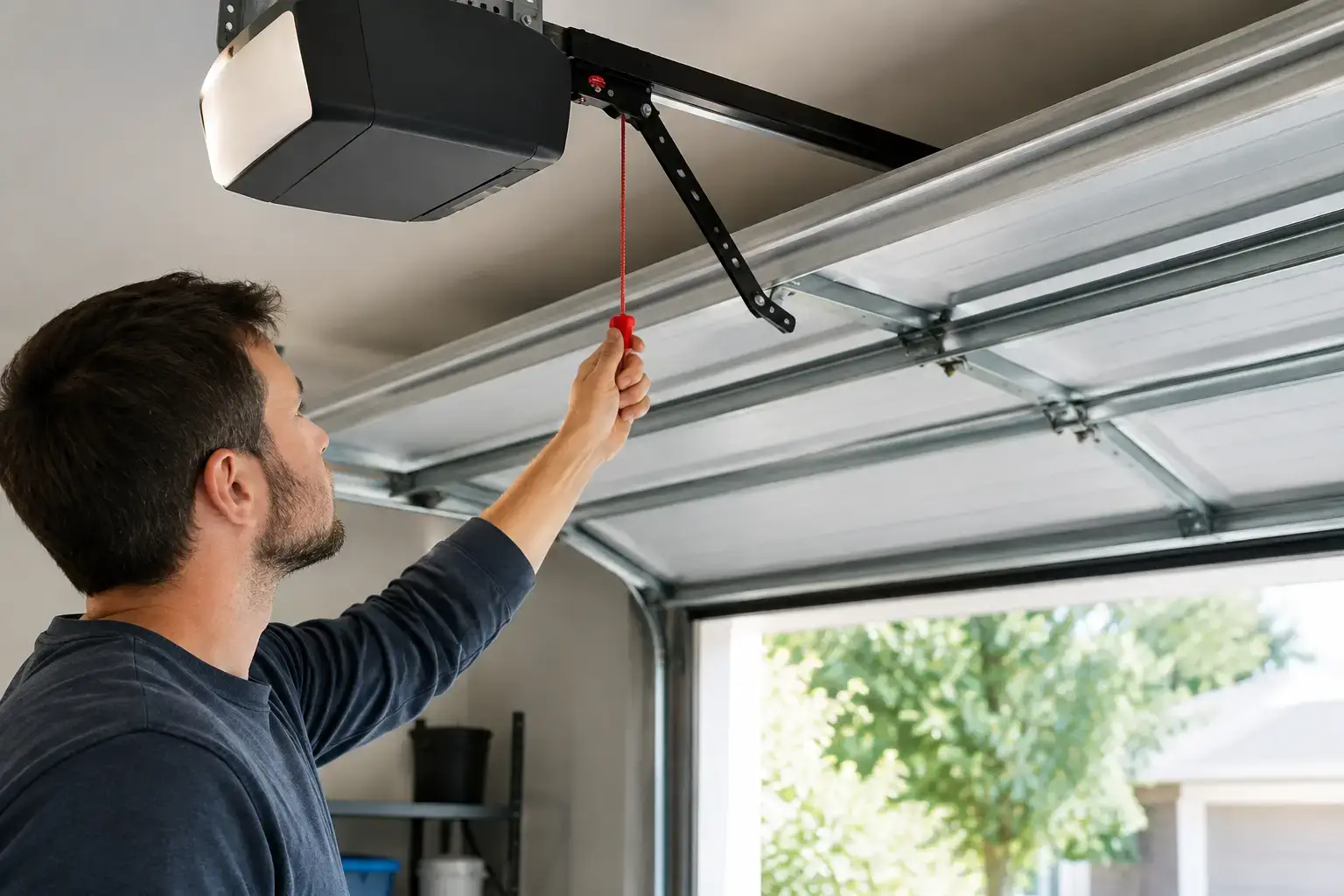
A power outage is inconvenient. A garage door that will not open when your vehicle is inside is a bigger problem. The good news is that most automatic openers have a manual release. The question “how to release garage door” usually comes down to finding the red emergency cord and using it at the right time.
That last part matters. Releasing a healthy, closed garage door is usually simple. Releasing a door that is open, crooked, heavy, or hanging on one cable can be dangerous. If something does not look right, do not force it. Tell a garage door technician what the door is doing and get a straight answer before anyone gets hurt or the damage gets worse.
Before You Pull the Emergency Release Cord
Look at the door first. Is it fully closed and sitting level on the floor? Are both lift cables in place at the sides? Do you see a broken spring above the door, a loose cable, bent track, or rollers out of the track?
If the door is closed, level, and simply will not operate because the power is out or the opener has failed, manual release is normally safe to use. Make sure the door is unlocked first. Many homes have a manual slide lock or handle lock, and trying to lift the door while it is locked can damage the door or opener.
If the door is partly open, do not pull the red cord without thinking it through. A working garage door spring counterbalances most of the door's weight. When a spring is broken, the opener may be the only thing preventing the door from dropping. The same applies when a cable has snapped or slipped off the drum. A door can come down fast and weigh well over 100 pounds.
Keep children, pets, and vehicles clear of the opening. Do not stand directly under the door, and do not place fingers between sections or near the tracks.
How to Release a Garage Door With the Red Cord
The emergency release is usually a red rope with a red handle hanging from the opener rail. It connects the door trolley to the automatic opener carriage. When you pull it, the opener disengages so you can move the door by hand.
Start with the garage door fully closed whenever possible. Turn off power to the opener by unplugging it or switching off the circuit if you can safely reach it. This prevents someone from pressing a remote while you are working around the mechanism.
Stand inside the garage, near the centre of the door but clear of its travel path. Pull the red emergency release handle straight down with a firm, controlled pull. You may hear a click. The trolley has now separated from the opener carriage.
Try lifting the door from the bottom handle. A properly balanced door should move with reasonable effort and stay roughly in place when opened halfway. It may feel heavier than expected, but it should not slam down or require two people to lift it.
Once open, raise it all the way until it stops against the open position. Do not leave it halfway open if you are driving out. Wind, vibration, or a weak spring can cause an unbalanced door to move unexpectedly.
When you return, pull the door down slowly using the handle. Keep a firm grip and do not let it free-fall. If it becomes difficult to control, stop and call for service rather than fighting with it.
When You Should Not Manually Release the Door
The red cord is for a power outage or an opener issue. It is not a fix for a mechanical problem. Stop and arrange a repair if you notice any of these signs:
- A loud bang came from the garage and the door now feels extremely heavy
- The door is hanging crooked or one side is lower than the other
- A lift cable is loose, frayed, or wrapped around the drum above the door
- Rollers have come out of the track, or the track is bent away from the wall
- The door opens only a few inches, shakes badly, or will not stay open
- You see a gap in the torsion spring above the door
A broken torsion spring is one of the most common reasons a door will not lift after a loud bang. The opener may hum, strain, or move the door a few inches before stopping. Pulling the emergency release will not make that door safer or lighter. It simply removes the opener from the equation.
Ontario winters can also create a different problem. Snow, ice, or a frozen bottom seal can hold the door to the floor. Do not keep pressing the opener or yank the door upward. You can tear the seal, strip opener gears, or pull a cable loose. Clear snow and ice around the outside bottom edge carefully, then try again. If it remains stuck, it needs attention.
How to Reconnect the Garage Door Opener
After the power comes back, reconnecting the opener is usually easy. First, make sure the door is fully closed. Pull the red release cord down and toward the opener motor until the trolley latch is set to reconnect. The exact angle can vary by opener model, but you should feel or hear the latch reset.
Plug the opener back in, then press the wall button or remote. The carriage will travel along the rail and click back into the door trolley. Test the door through one full open and close cycle while watching it from a safe distance.
Some openers reconnect automatically the next time you run the motor. Others need the release lever reset manually first. If the opener runs but the door does not move, the trolley may still be disengaged. Do not repeatedly run the opener against a disconnected trolley. Reset the release or have someone inspect it.
If you released the door while it was open and cannot safely bring it down, do not leave your home exposed while hoping it stays up. A technician can secure the door and identify whether the problem is the opener, spring, cable, track, or another part.
What a Balanced Garage Door Should Feel Like
A manual release gives you a useful clue about the condition of your door. With the opener disconnected, a properly adjusted residential garage door should feel controlled, not wildly heavy or impossible to hold. It should not race upward either.
A door that is very heavy often has a broken spring. A door that rises on its own may have incorrect spring tension. A door that binds, scrapes, or travels unevenly may have roller, hinge, cable, or track damage. These are not good do-it-yourself adjustments. Springs and cables are under high tension, and a small mistake can cause serious injury or turn a manageable repair into a damaged door.
The practical move is to leave spring winding, cable replacement, and track realignment to a trained technician. You can describe the symptoms clearly: whether you heard a bang, whether the door is crooked, whether it opens at all, and whether the red cord is already released. That helps get the right repair started quickly.
A Quick Check Before the Next Outage
It is worth finding the emergency release before you need it. Park your vehicle outside one day, stand inside the garage, and locate the red cord. Make sure everyone in the household who may need to leave during an outage knows where it is and understands that it should only be used when the door is closed and level.
You can also test the door balance once or twice a year by disconnecting the opener with the door closed, then lifting it manually. If it feels much heavier than it used to, makes grinding noises, or will not hold its position, book service before it fails on a freezing morning or when you are trying to get to work.
A garage door should give you reliable access to your home, not trap your car inside or leave your garage open overnight. If the manual release does not solve the problem safely, leave the door where it is, keep the area clear, and get a local repair crew to fix the actual cause.