
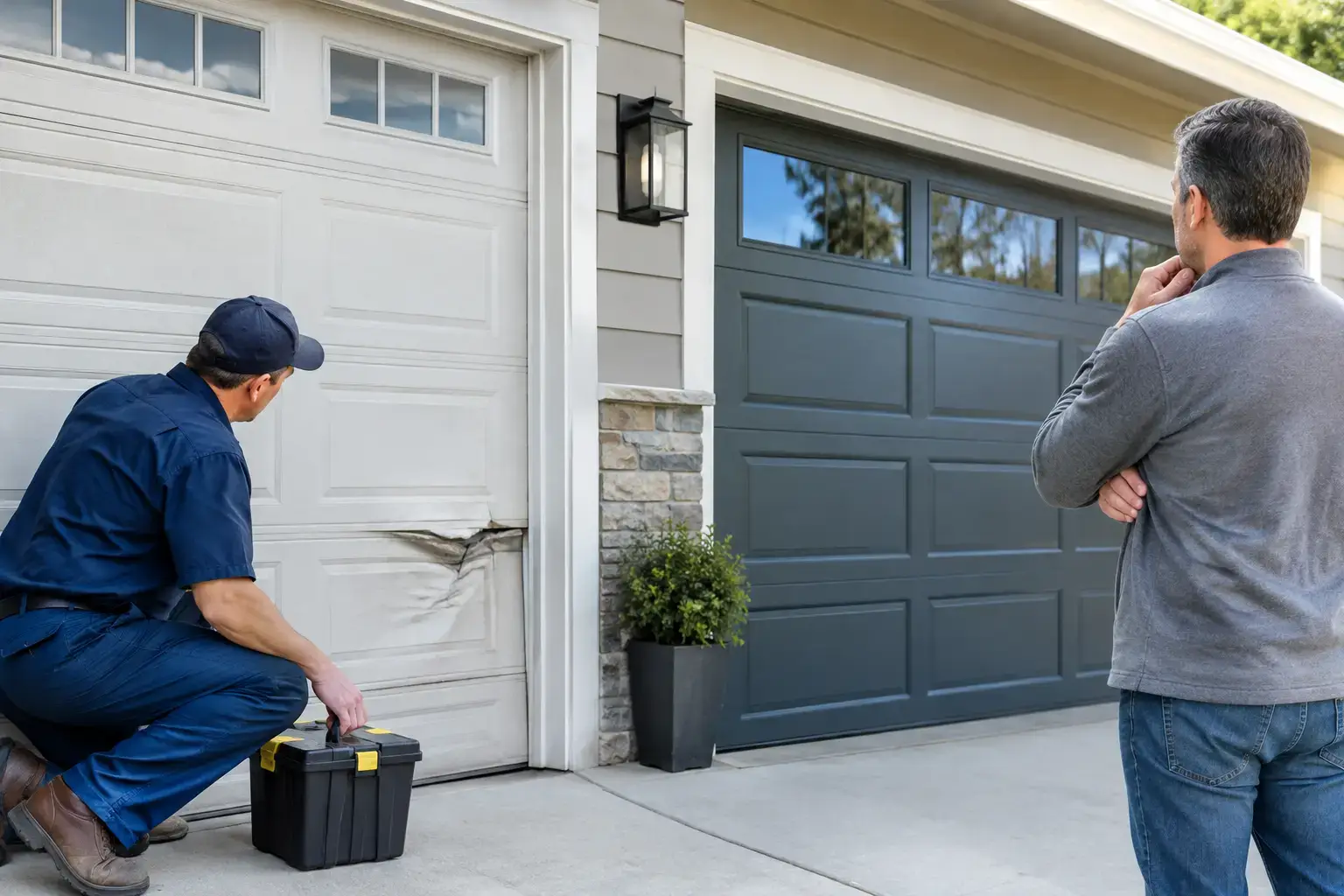
A garage door can fail at the worst possible time: your car is trapped inside, the door is hanging crooked, or a loud bang has left it stuck halfway. When that happens, the question is usually simple: repair versus replace garage door - which one makes sense for your home and your budget?
The honest answer depends on what failed. A broken spring or snapped cable can make a perfectly good door look finished when it is actually a same-day repair. On the other hand, a door with severe panel damage, rusted sections, failing hardware and an outdated opener may cost more to keep alive than it is worth. The goal is not to sell you a new door when a repair will do. It is to get your door safe, secure and working properly again.
Repair Versus Replace Garage Door: Start With the Problem
Most garage door problems are repairable because the door itself is not the part that has failed. Springs wear out. Rollers crack. Cables fray. Openers stop responding. Bottom seals let in snow, water and daylight. These parts work hard through thousands of opening cycles and Southern Ontario winters, but they can usually be replaced without replacing the entire door.
When repair is usually the right call
Repair is often the practical option when the door is structurally sound and the issue is limited to one or two working parts. A broken torsion spring, for example, is a common failure that can leave the door extremely heavy or completely stuck. Replacing the spring can restore normal operation without changing the door panels, tracks or opener.
The same applies to worn rollers, bent hinges, loose brackets, damaged weather stripping, failed remotes and many opener problems. A door that is noisy, slow or uneven may need adjustment and replacement hardware, not a full installation.
A single damaged panel can sometimes be replaced too, especially when the model is still available and the remaining sections are in good condition. That can be a sensible fix after a minor vehicle bump or impact from a hockey net, bike or snowblower.
Repair also makes sense when the door is relatively new, has no widespread rust or cracking, and still suits the look and insulation needs of the home. There is no reason to replace a good-quality door just because one component reached the end of its lifespan.
When replacement is the better investment
Replacement becomes more reasonable when the door has several problems at once or the damage affects its structure. A garage door is a large moving system. If the sections are weakened, the tracks are badly damaged, or the door no longer runs safely even after repair, putting more money into individual parts may only delay the next breakdown.
Consider replacing the door if you are dealing with four or more of these signs:
- Multiple cracked, dented or rotted door sections
- Heavy rust along the bottom edge, seams or hardware mounting points
- Repeated breakdowns after recent repairs
- A door that is badly warped, sagging or difficult to keep aligned
- Poor insulation, major air leaks or water entering the garage
- An older door that cannot safely work with current hardware or opener equipment
Replacement may also be the right choice when an exact matching panel is no longer made. Installing one mismatched section can leave the front of your home looking patched together. If several panels are faded, damaged or showing their age, a new door often gives better value and a cleaner result.
What Your Garage Door Is Telling You
The symptom matters as much as the age of the door. A loud bang from inside the garage is often a broken spring. Do not keep pressing the opener button to force the door up. The opener is not designed to lift the full weight of a garage door without spring support, and pushing it can damage the motor, rail or gears.
If the door is hanging crooked, one cable may have come off or snapped. Stop using it immediately. A crooked door can bind in the track or come down unexpectedly. This is not a situation for a quick adjustment with household tools.
A door that moves a few inches and reverses may have an obstruction, dirty safety sensors, damaged rollers or an opener issue. A door that scrapes, shakes or makes grinding noises may have worn rollers, loose hardware, track damage or a lack of proper lubrication. These are often repair issues, but they should be inspected before they become a bigger one.
Water, cold air and daylight around the bottom of the door usually point to a worn bottom seal or weather stripping. In Cambridge, Waterloo Region, Guelph and nearby communities, that small gap can bring in slush, wind and moisture through the winter. Replacing the seal is far less costly than replacing the door if the panels remain solid.
Age Matters, But It Is Not the Whole Story
An older garage door does not automatically need to be replaced. Some doors last for decades when the panels are sound and the moving parts are maintained. Others need replacement much sooner because of poor installation, corrosion, repeated impact damage or heavy daily use.
Look at the door as a whole. Are the sections straight? Is the insulation still intact? Are the hinges firmly attached to solid material? Does the door open manually with reasonable balance when the opener is disconnected? Has it needed one isolated repair, or has it become a regular problem?
If your door is 15 to 20 years old and needs its first spring replacement, repair may still be the smart move. If it is the same age and has failing panels, rusted hardware, poor sealing and an unreliable opener, replacement gives you a reset instead of another temporary fix.
Compare the Cost of the Fix With What You Get Back
The lowest price today is not always the lowest cost over the next few years. A straightforward repair can be the best value when it restores safe, dependable operation. But repeated service calls for an aging, damaged door can add up quickly.
Think about what the repair solves. Replacing a broken spring solves a clear mechanical problem and can give the door years of additional service. Replacing rollers and hinges on a solid door can make it quieter and smoother. Those are useful repairs.
By contrast, spending money on an opener when the door is warped, poorly balanced and dragging through damaged tracks may not solve the real issue. The new opener will still be working against a bad door. In that case, replacing the door and installing the right opener can prevent more frustration.
A good quote should be clear about the immediate repair, the condition of the rest of the system and whether replacement is worth considering. You should not be pressured into a new door because a technician arrived for a spring or cable repair. Ask what has failed, why it failed, what the repair includes and what could reasonably need attention later.
Do Not Take Risks With Springs, Cables or a Door Off Track
Garage doors are heavy, and the parts that lift them are under serious tension. Torsion springs, extension springs and lift cables can cause injury or property damage when handled incorrectly. If a spring is broken, a cable is loose, or the door is off track, keep people and vehicles clear of the area.
Do not try to lift a stuck door by yourself, remove spring hardware or pull a cable back onto a drum. If the door is open and will not close, avoid standing underneath it. If possible, secure the garage through another entry point and arrange professional service.
For smaller issues, such as a remote that stopped working or photo-eye sensors that need cleaning, a quick check may help. But when the door is heavy, crooked, jammed or making harsh mechanical noises, it needs an experienced technician.
A Straight Answer Makes the Decision Easier
When you call for service, tell the technician what the door is doing. Mention whether you heard a loud bang, saw a loose cable, noticed visible damage, or found that the opener runs without moving the door. A few details make it easier to give you a straightforward quote before dispatch and bring the right parts for the job.
Summit Garage Door takes the same practical approach whether the answer is a spring repair, a cable repair, a panel replacement or a new door installation. The right solution is the one that restores safe access without paying for work your door does not need.
If your garage door is stuck, crooked or unsafe, do not let a small mechanical failure turn into damage to the door, opener or vehicle. Get the issue assessed, hear the options clearly, and choose the repair or replacement that lets you use your home normally again.